
-
2022 Chaze Yaocha Guangbie Old Village Raw Pu Erh Tea Cake 357g
Regular price €39,95 EURRegular priceUnit price per -
2024 Manzhuan Walong Village Wild Raw Pu Erh Tea
Regular price €16,50 EURRegular priceUnit price per -
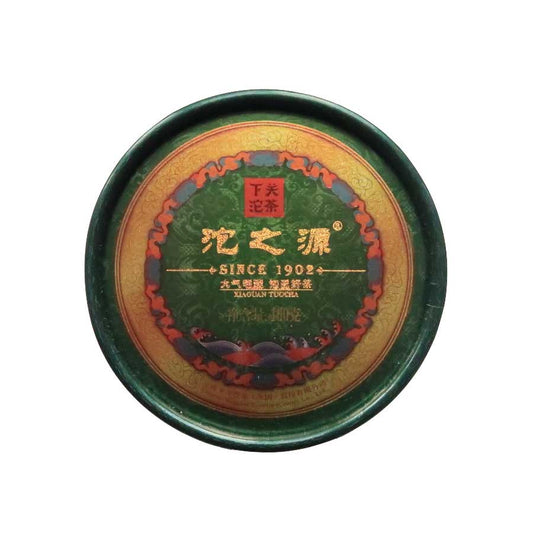
2014 Tuo Zhi Yuan (Origin of Tuo) Raw Pu Erh Tuocha
Regular price €19,95 EURRegular priceUnit price per -
2013 Xiaguan Jin Si 'Gold Ribbon' Raw Pu Erh Tuocha
Regular price €15,95 EURRegular priceUnit price per -
2017 Xiaguan FT Red Box Te Ji Pu Erh Tuocha
Regular price €13,95 EURRegular priceUnit price per -
2019 Ancient Trees Lao Ban Zhang Raw Pu Erh Tea Balls
Regular price €11,60 EURRegular priceUnit price per -
2017 Xiaguan Nan Zhao Raw Pu Erh Tuocha
Regular price €14,95 EURRegular priceUnit price per -
2017 Xiaguan Jin Si Da Xue Shan Pu Erh Tuocha
Regular price €14,95 EURRegular priceUnit price per -
2017 FT Green Box Jia Ji Raw Pu Erh Tuocha
Regular price €12,95 EURRegular priceUnit price per -
2010 Ancient Gate Yiwu Aged Raw Pu Erh, Mini Cakes 7g
Regular price €16,50 EURRegular priceUnit price per -
2025 "Wild Mountain Spirit Leaf" Yongde Raw Pu Erh Tea Balls
Regular price €11,95 EURRegular priceUnit price per -
2012 Xiaguan Jingmai Gushu Pu Erh Tuocha
Regular price €14,95 EURRegular priceUnit price per -
2023 Raw Gu Shu Pu Erh Tea Cakes 4x357g
Regular price €280,00 EURRegular priceUnit price per -
2024 Xiaguan 20th Anniversary Jin Si Raw Pu Erh Tuocha 100g
Regular price €12,95 EURRegular priceUnit price per -
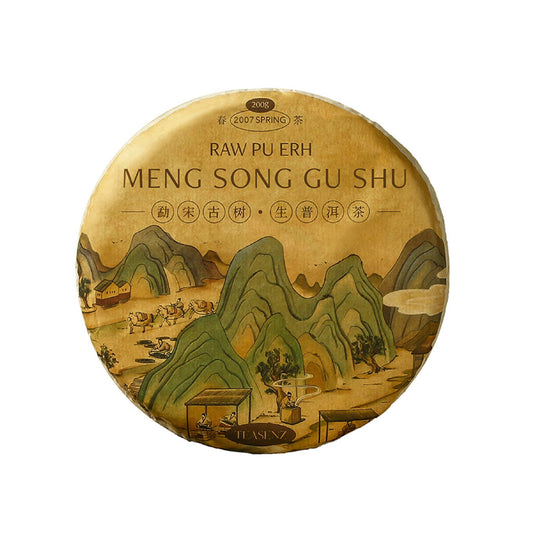
2007 Meng Song Ancient Tree Raw Pu Erh Tea Cake 200g
Regular price €99,95 EURRegular priceUnit price per -
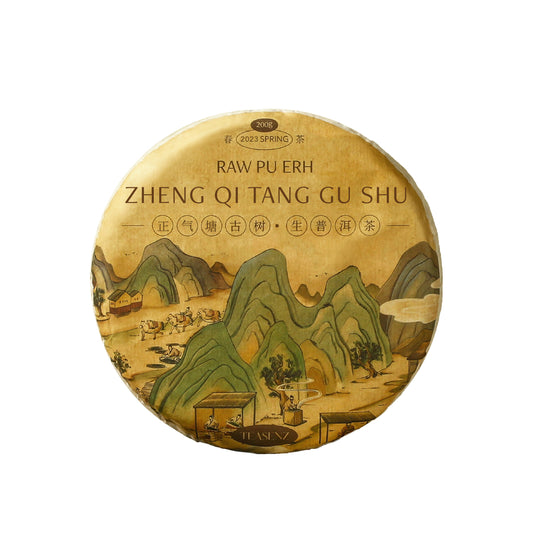
2023 Zheng Qi Tang Ancient Tree Raw Pu Erh Tea Cake 200g
Regular price €47,95 EURRegular priceUnit price per




Raw pu erh tea
At Teasenz, we offer a wide range of carefully selected raw pu erh teas in Europe. Our teas are available in different shapes such as round cakes and tuocha. You'll see familiar brands in our catalog, such as Dayi and Xiaguan, but also products from smaller factories such as Oripuerlab or Chaze. And of course, we also offer the most premium raw pu erh tea under our own brand label.
What is raw pu erh tea?
Pu erh tea is a type of tea that originates from Yunnan, China. They mostly made from the local large leaf varietal (da ye zhong). Typically, teas from this region aren't sold in loose tea, but first compressed in various shapes, such as round cakes or tuocha. Raw pu erh is the most classic type of pu erh that doesn't undergo pile fermentation, which we will explain below.
Raw pu erh tea known for its complex aroma profile that can range from grassy and herbaceous to fruity and floral. At Teasenz, we offer a wide range of raw pu erh teas, both fresh and aged, and offered in various shapes. In the FAQ section below, we will also explain more about the production process and the difference between ripe and raw pu erh tea.
Collapsible content
FAQ
Mao cha, compression and aging
There are two kinds of pu erh: raw and ripe. Both kinds are made with 'mao cha' (rough tea), which are pu erh tea leaves in uncompressed state. Mao cha is the result of wilting, heating, kneading and sun-drying tea leaves. Tea in this state can already be considered loose raw pu erh tea. However, most of the times mao cha is compressed into different shapes as you can see above.
Raw Pu erh can be consumed immediately to enjoy its fresh, floral or fruity flavors, or it can be left to age to achieve a mellower and more complex flavor. Naturally aged raw pu erh, particularly those made from premium materials, are the most sought-after by pu erh tea enthusiasts.
Ripe vs raw pu erh tea
While raw pu erh is stored for slow and natural aging, ripe pu erh is made through a process called 'pile fermentation'. This technique was developed to increase the speed of fermentation in a controlled environment. Instead of compressing mao cha right away, they're first piled up in a humid and temperature controlled room and covered with cloths. In this way, the leaves will ferment faster and start to turn brown. The pile fermented tea leaves are afterwards compressed into various shapes of ripe pu erh tea.