


2016 Rugiada Primaverile (Chun Lu) Haiwan
2016 Rugiada Primaverile (Chun Lu) Haiwan
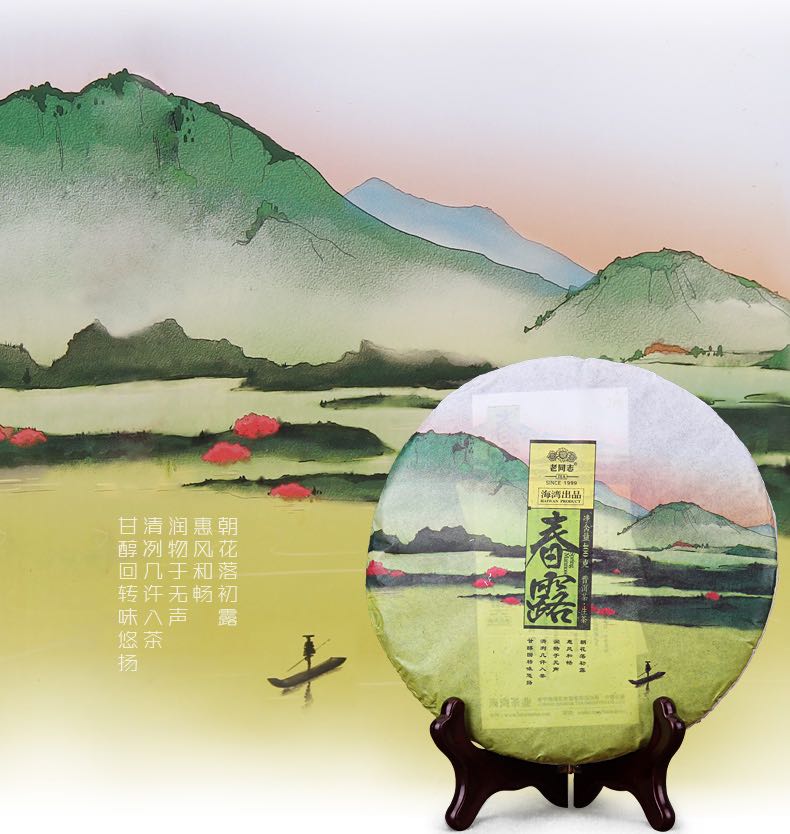
Questo tè Pu Erh crudo Rugiada Primaverile fa parte della serie 4 Stagioni della fabbrica Haiwan, rilasciata nel 2016. Simile alla nostra torta Ba Nuo, è anch'esso composto da un tipo speciale di tè teng tiao proveniente da Ba Nuo, Mengku.
Il profumo di questo tè è ricco e fragrante, come fiori appena sbocciati sotto il sole primaverile. Il colore del liquore è dorato e traslucido e il sapore è complesso e pieno in bocca, con un dolce retrogusto persistente.
Origin
Origin
- Anno: 2016
- Stagione: Primavera
- Provenienza: Mengku Damuoshan
- Qualità foglia: albero antico selvatico (gushu)
- Varietà (cultivar): grande foglia Assamica (Da Ye Zhong)
- Data di produzione: 42505
- Lotto: 1
- Compressione: compressa leggermente
- Tipo: crudo (sheng)
- Marca: Haiwan
- Serie/ricetta: Rugiada di Primavera (Chun Lu), Teng Tiao
- Forma: torta di tè pu erh
- Peso: 400g
How to Steep
How to Steep
How to make Haiwan Spring Dew (Chun Lu), Teng Tiao tea?
There are two methods to prepare this pu erh tea cake:
Gongfu brewing
Brew 7 gram with 120 ml of water at 95 °C. Steep for 10 seconds and add 5 seconds for each infusion.
Western brewing
Steep 3 gram with 350 ml of water at 95 °C. Apply a brewing time of 3-4 minutes and add 1 minutes for each subsequent infusion.



Our design work is inspired by the artwork “Along the River During the Qingming Festival” by the Zhang Zeduan in the Song Dynasty. Instead of displaying the daily lives of people in the capital of China (as the original artwork), we display the tea making process of farmers through the same bird’s eye perspective.
When examining our packaging design in detail, tea enthusiasts will observe the tea making process, featuring tea farmers picking, drying, rolling, and frying tea leaves. The tea is then tasted in a pavilion and transported by horses along the ‘ancient tea road’.
Together, the traditional Chinese landscape and tea making theme, symbolise heritage, tradition, and respect for hard work of tea farmers.