
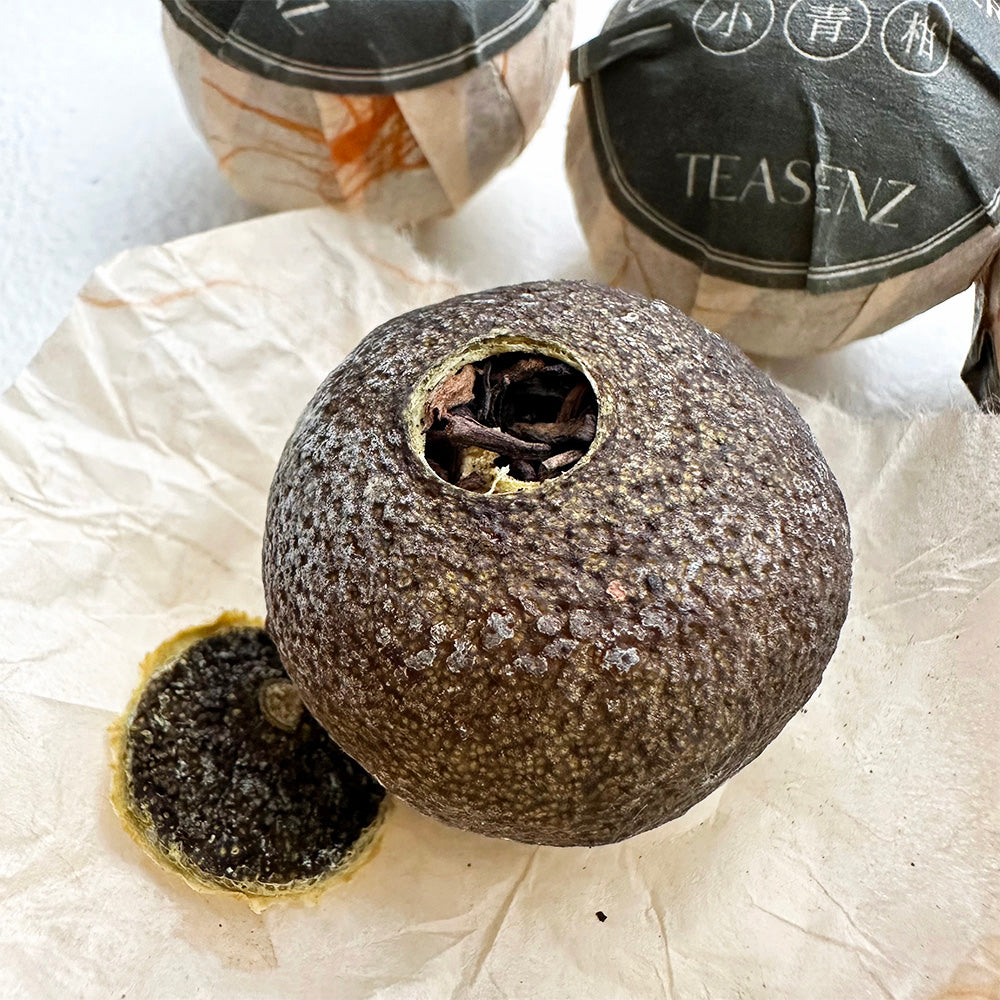
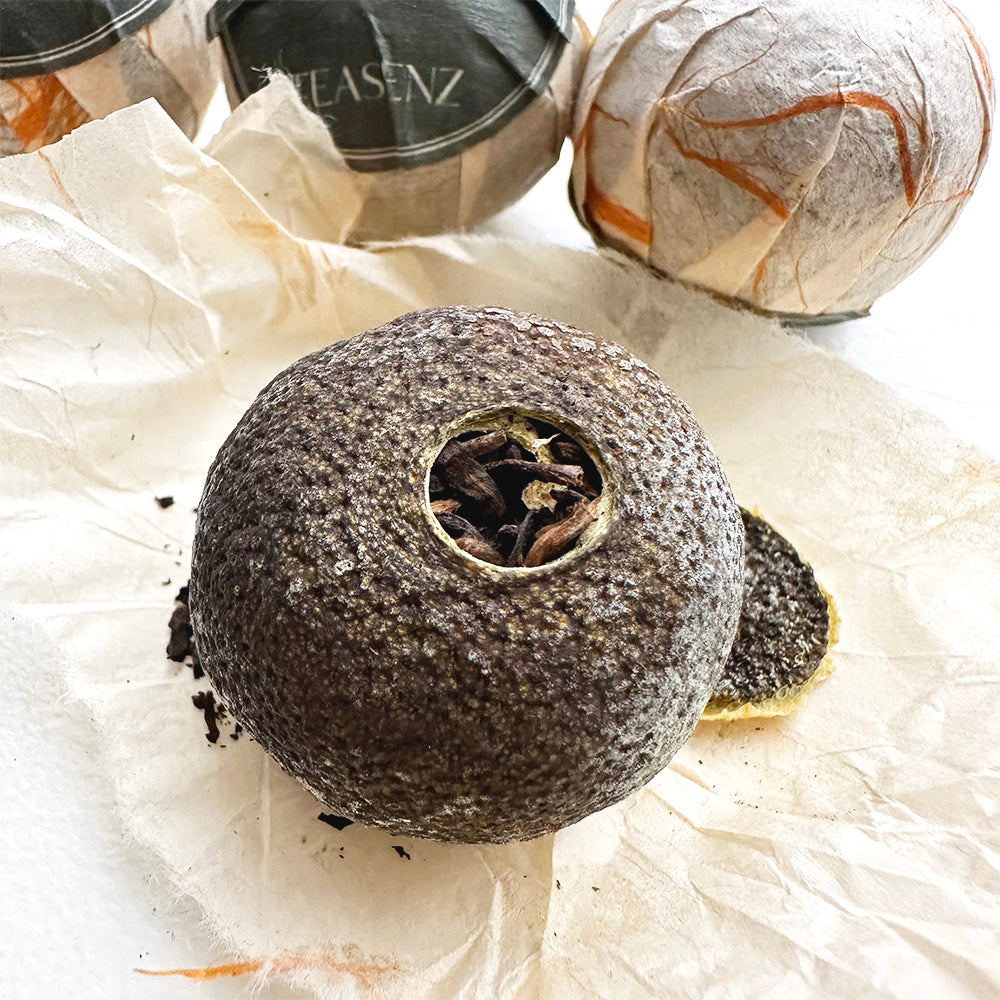
2023 Mini Mandarini farciti di Tè Pu Erh (Xiao Qing Gan)
2023 Mini Mandarini farciti di Tè Pu Erh (Xiao Qing Gan)
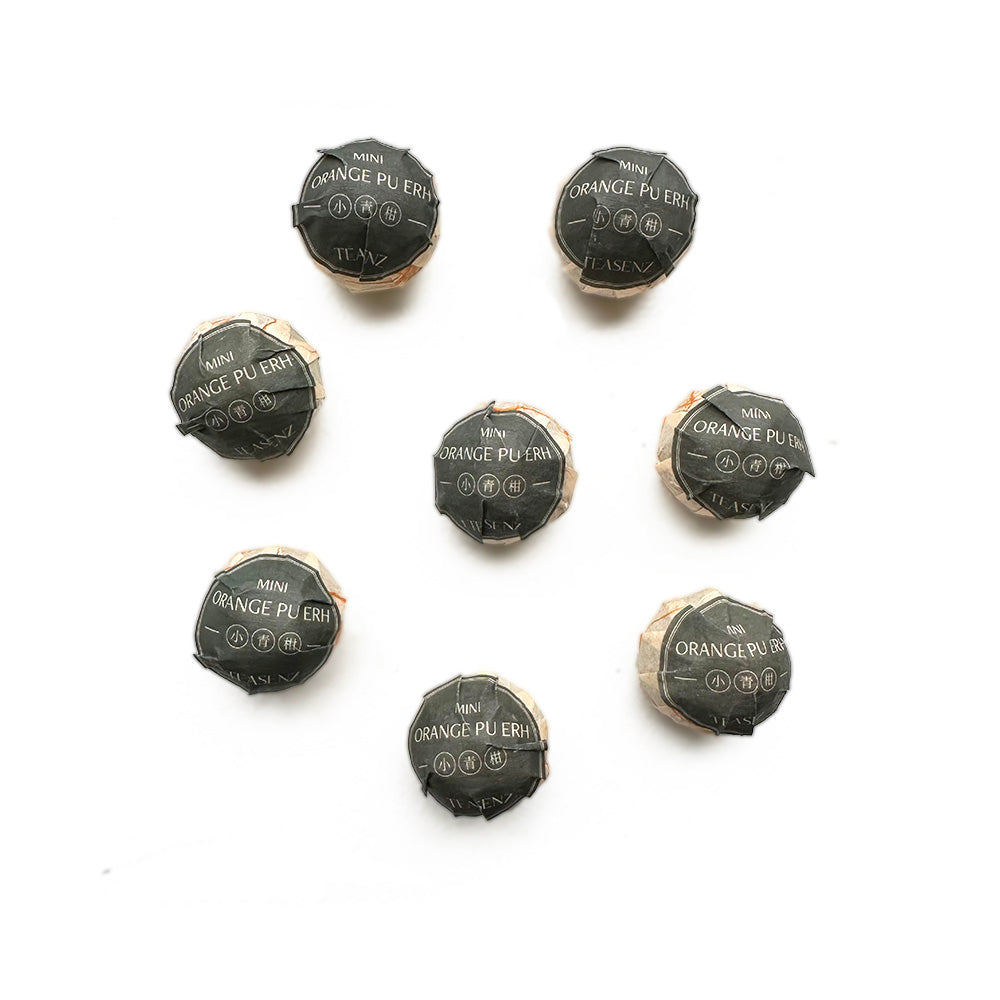
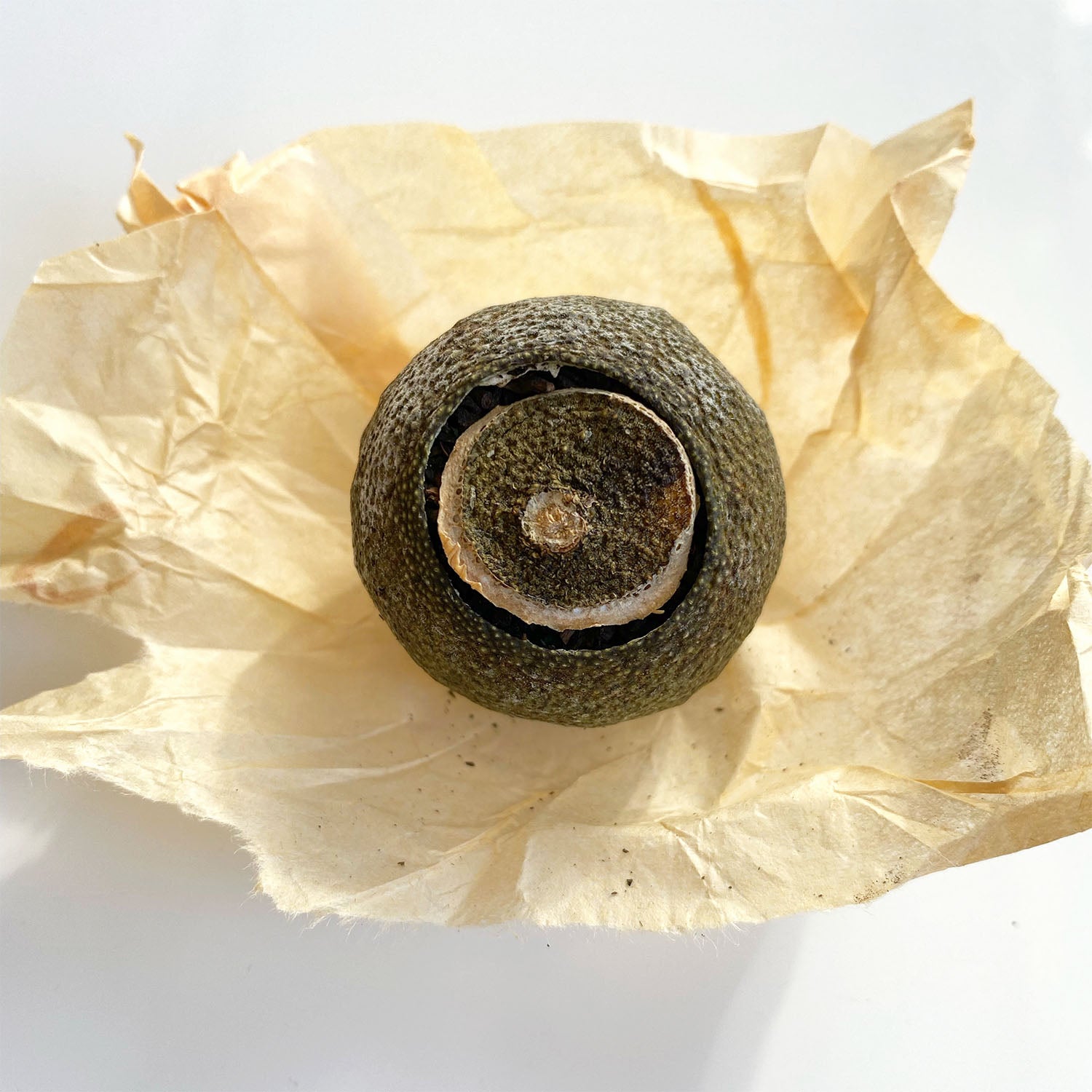
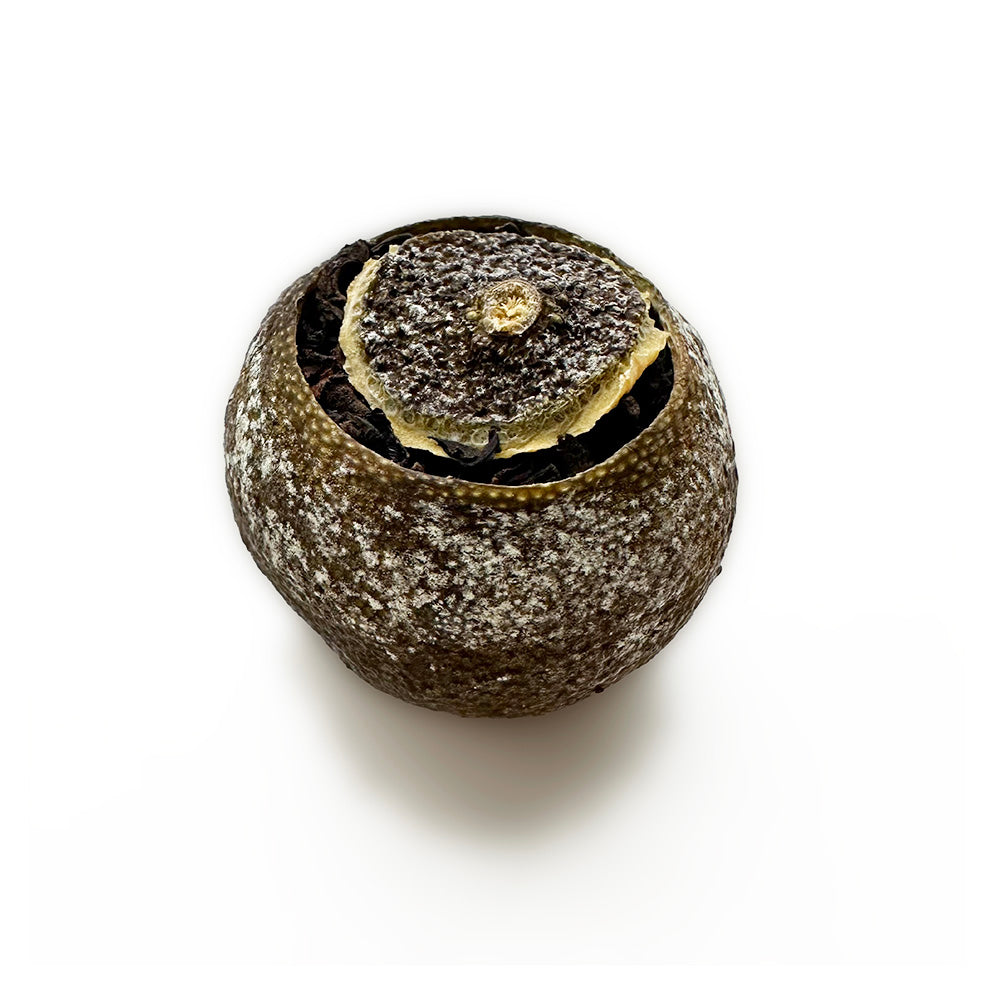
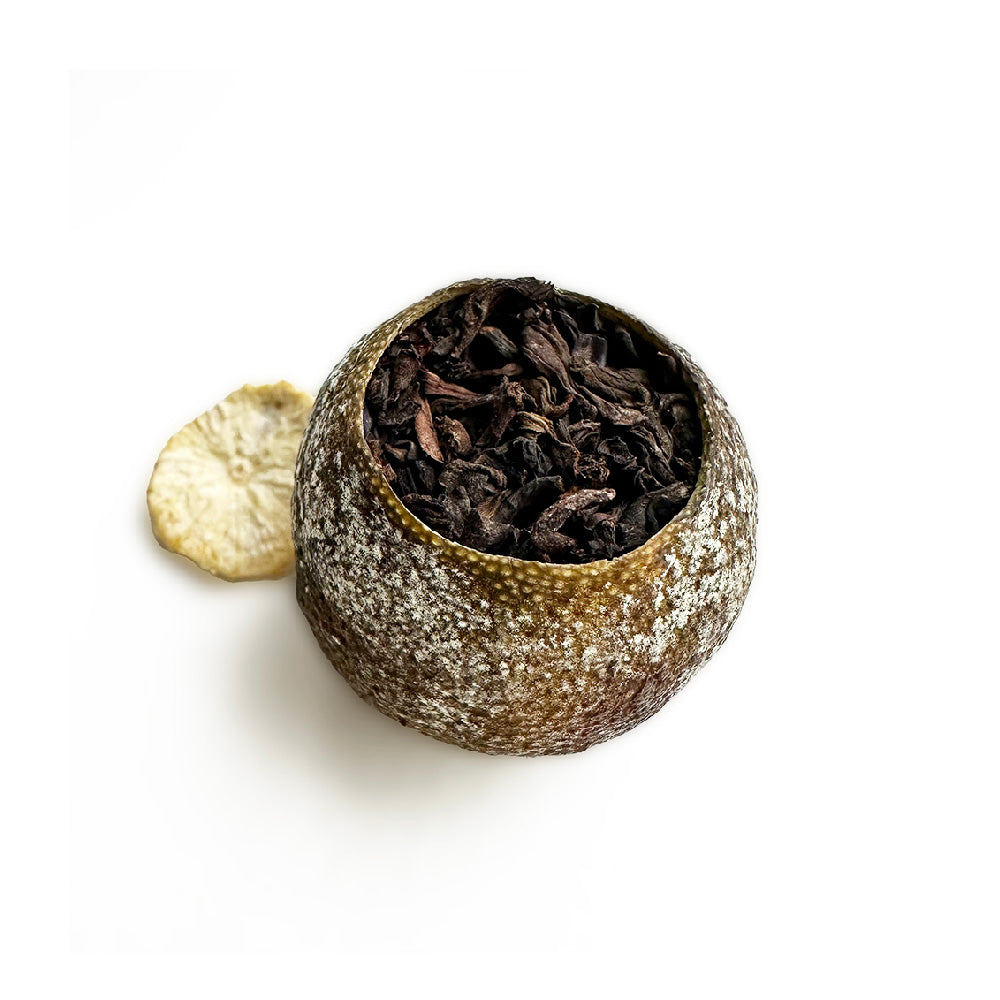
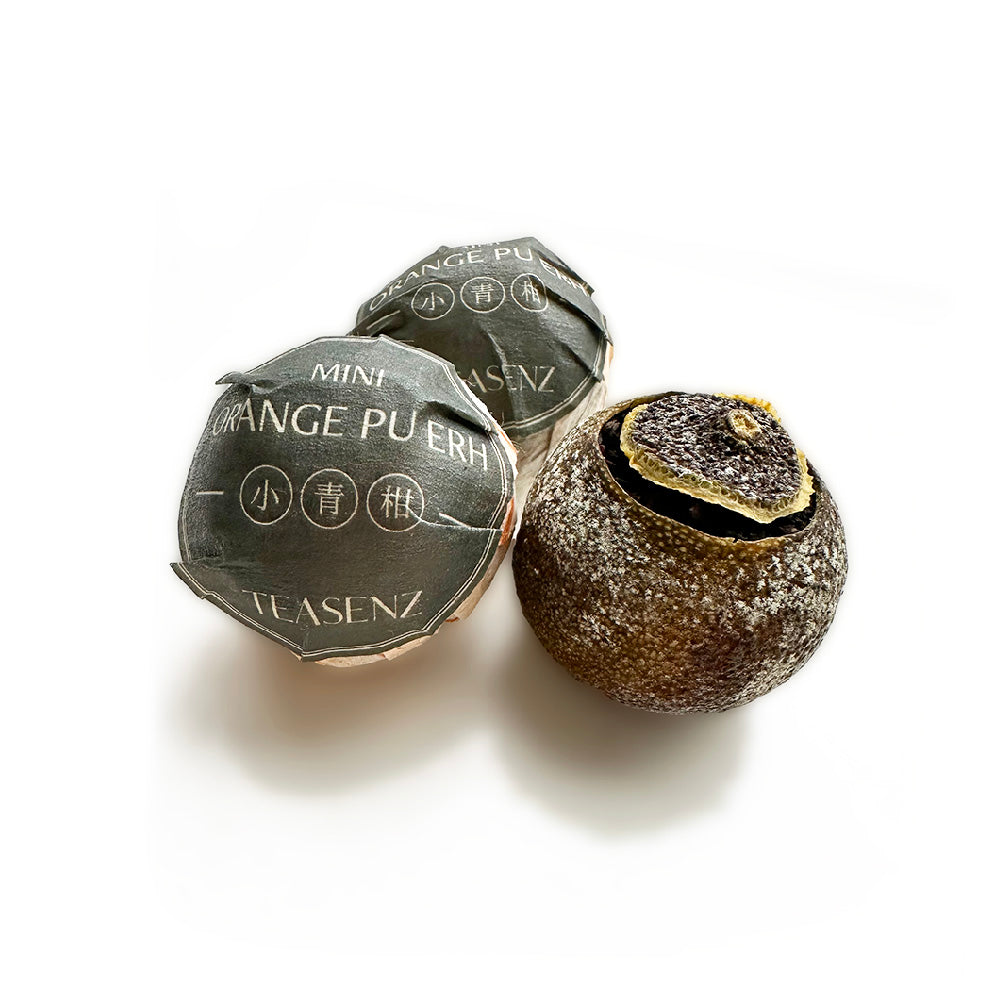
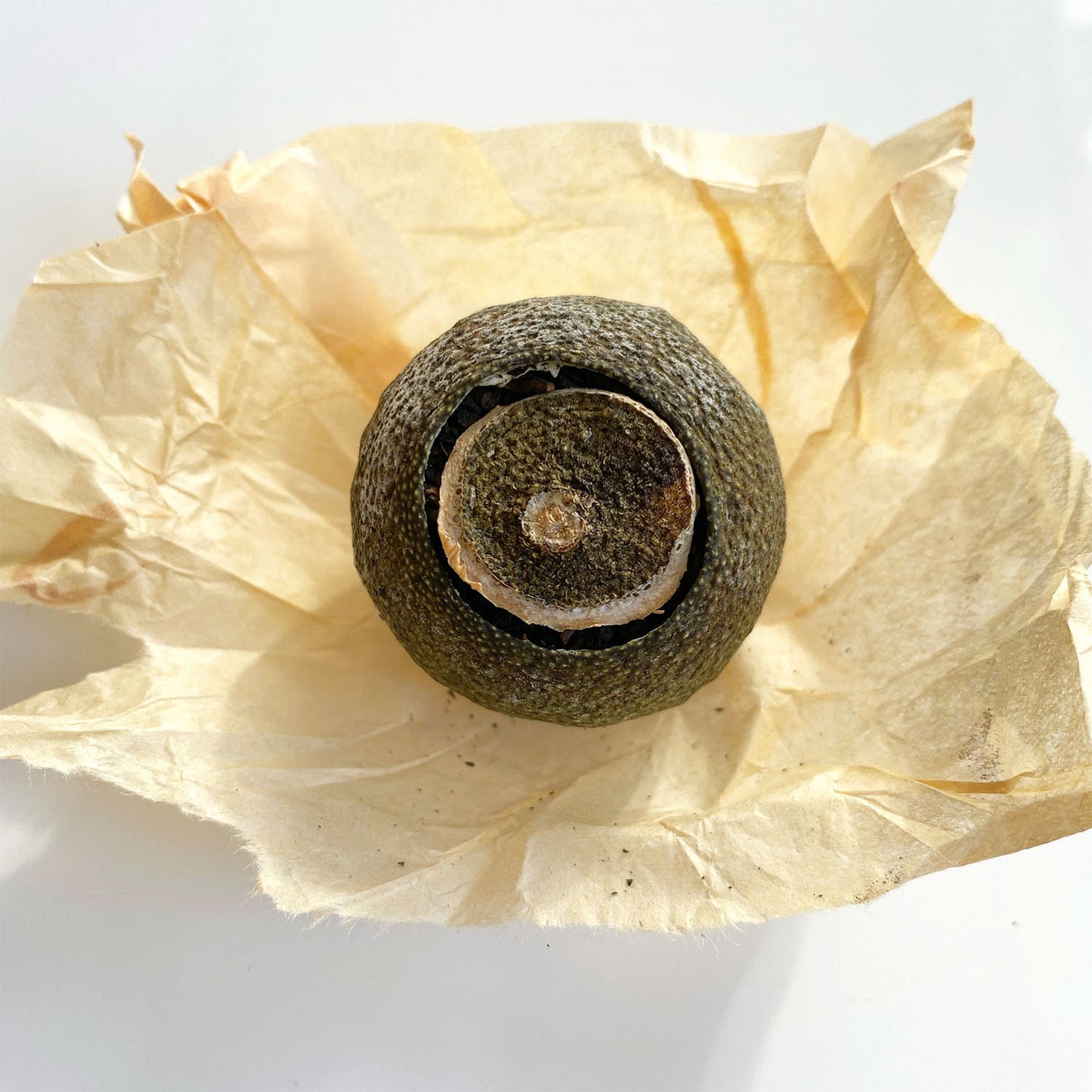
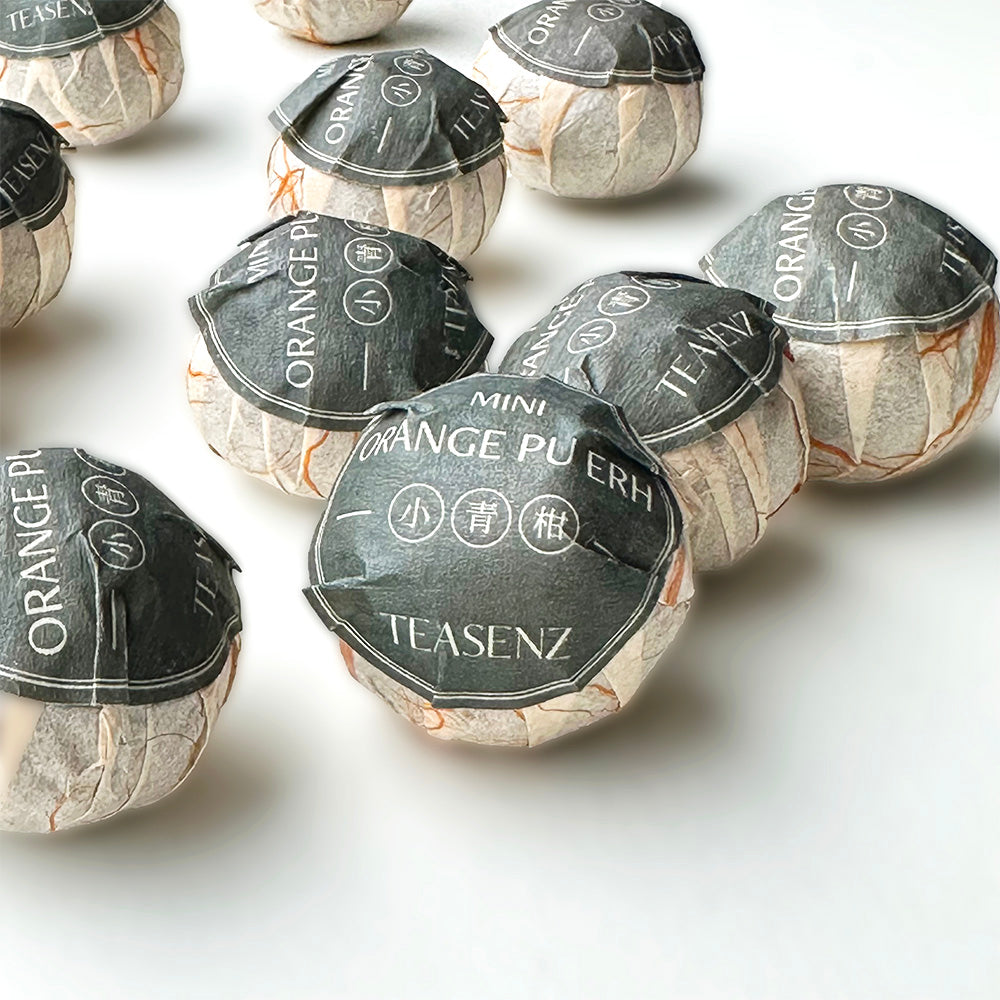
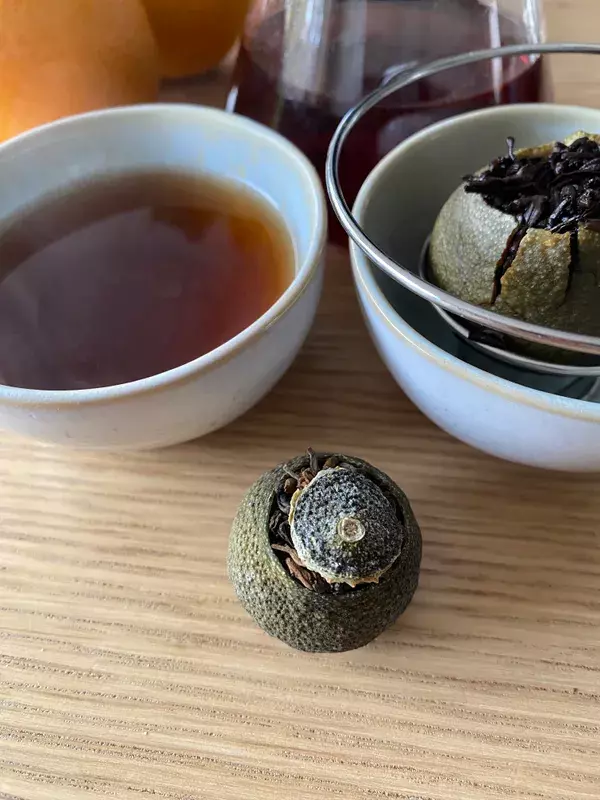
Un piccolo mandarino verde di Xin Hui ripieno di tè Pu Erh maturo, che bilancia perfettamente l'aroma terroso del tè con l'aroma fruttato della sua scorza.
Consigliamo vivamente di leggere le nostre istruzioni di infusione per bilanciare in modo ottimale i sapori e gli aromi che questo tè ha da offrire.
I mandarini utilizzati per questo Xiao Qing Gan provengono da Xinhui (provincia del Guangdong): una nota regione specializzata da più di mille anni nella produzione di questi piccoli agrumi. Originariamente utilizzati nella medicina tradizionale cinese, questi mandarini sono efficaci contro il mal di gola e i problemi di stomaco, favorendo al tempo stesso la digestione.
Negli ultimi anni sono diventati popolari anche da bere insieme al Pu Erh stagionato. In Cina queste arance sono chiamate "Xiao Qing Gan" (piccola arancia verde), "Gan Pu" (Pu Erh in bucce d'arancia essiccate) o "Chenpi Pu Erh" (Pu Erh in bucce d'arancia invecchiate).
Origin
Origin
- Origine: Xin Hui e Menghai
- Anno: 2023
How to Steep
How to Steep
Steep one little mandarin in 500ml water at 100ºC for 4 minutes. This will result an optimal balance between the flavour of ripe pu erh and orange peel.
For the second steep, you can shorten the steeping time to 2 minutes. Then for every next steep, you can increase the steeping time by 1 minute.
Super Preis-Leistung. Mittlerweile mein Lieblingstee
Nice tea! I have tried this for the first time and the taste is really good, nicely strong pu erh inside and the orange just adds that bit of extra flavour. Also really warming for the body, perfect now the weather is getting colder.
These are just fantastic. I didn't think that I'd ever find a xiao qing gan that would match the really expensive Tian Ma's I have but these are just as good for half the price tag. Really strong and vibrant scent, great Shu pu-erh filling, the colour of the tangerines is spot on with plenty of white patina, the brew itself has a great aroma, the colour is deep, with an amazing gradient. And the taste is of course wonderful. I highly recommend these and I'm thankful for the people at teasenz for recommending I tried them. I will be buying (many) more as soon as I'm able to.

Our design work is inspired by the artwork “Along the River During the Qingming Festival” by the Zhang Zeduan in the Song Dynasty. Instead of displaying the daily lives of people in the capital of China (as the original artwork), we display the tea making process of farmers through the same bird’s eye perspective.
When examining our packaging design in detail, tea enthusiasts will observe the tea making process, featuring tea farmers picking, drying, rolling, and frying tea leaves. The tea is then tasted in a pavilion and transported by horses along the ‘ancient tea road’.
Together, the traditional Chinese landscape and tea making theme, symbolise heritage, tradition, and respect for hard work of tea farmers.