


2016 Spring Dew (Chun Lu)
2016 Spring Dew (Chun Lu)
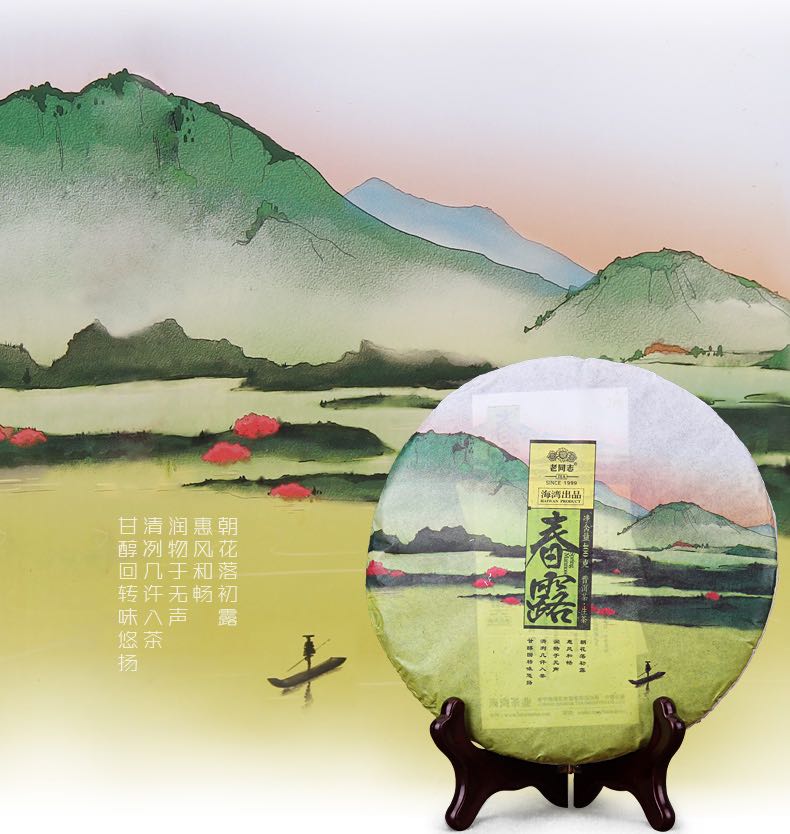
Ce thé pu erh brut "Spring Dew" fait partie de la série 4 saisons de l'usine Haiwan, sortie en 2016. Similaire à notre propre gâteau Banuo, il est également fabriqué à partir d'une sorte spéciale de teng tiao cha provenant de Banuo, Mengku.
L'arôme de ce thé est riche et parfumé, comme des fleurs en pleine floraison sous le soleil du printemps. La liqueur de thé est dorée et translucide, et le goût est riche et plein en bouche, avec une douceur persistante en arrière-goût.
Origin
Origin
- Année : 2016
- Saison : Printemps
- Origine : Mengku Damuoshan
- Qualité des feuilles : arbre ancien sauvage (gushu)
- Variété (cultivar) : grande feuille Assamica (Da Ye Zhong)
- Date de production : 42505
- Lot : 1
- Compression : légèrement compressé
- Type : cru (sheng)
- Marque : Haiwan
- Série/recette : Rosée de Printemps (Chun Lu), Teng Tiao
- Forme : galette de thé pu erh
- Poids : 400g
How to Steep
How to Steep
How to make Haiwan Spring Dew (Chun Lu), Teng Tiao tea?
There are two methods to prepare this pu erh tea cake:
Gongfu brewing
Brew 7 gram with 120 ml of water at 95 °C. Steep for 10 seconds and add 5 seconds for each infusion.
Western brewing
Steep 3 gram with 350 ml of water at 95 °C. Apply a brewing time of 3-4 minutes and add 1 minutes for each subsequent infusion.



Our design work is inspired by the artwork “Along the River During the Qingming Festival” by the Zhang Zeduan in the Song Dynasty. Instead of displaying the daily lives of people in the capital of China (as the original artwork), we display the tea making process of farmers through the same bird’s eye perspective.
When examining our packaging design in detail, tea enthusiasts will observe the tea making process, featuring tea farmers picking, drying, rolling, and frying tea leaves. The tea is then tasted in a pavilion and transported by horses along the ‘ancient tea road’.
Together, the traditional Chinese landscape and tea making theme, symbolise heritage, tradition, and respect for hard work of tea farmers.