
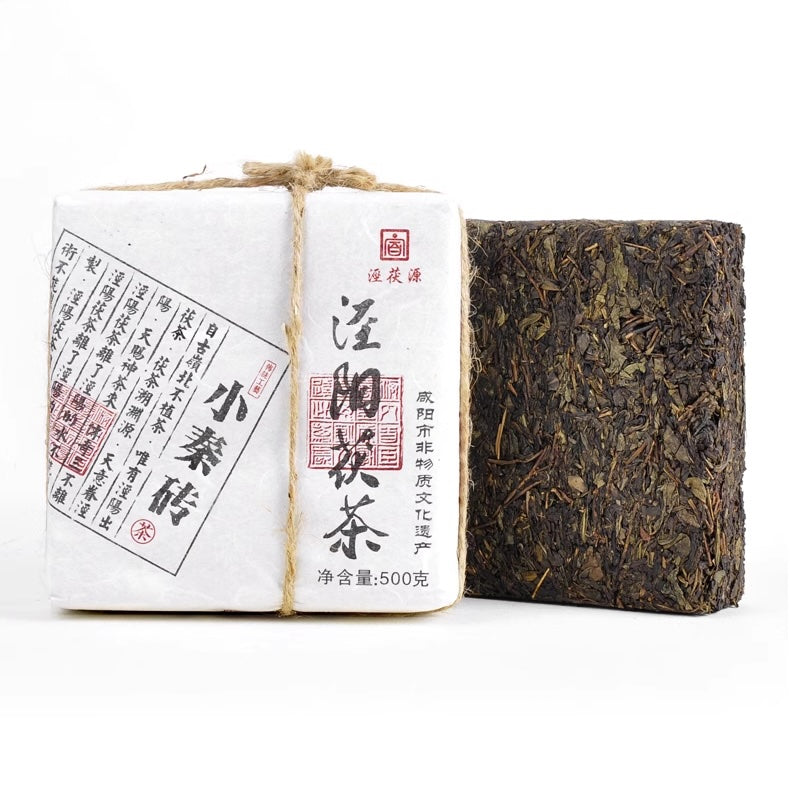
2018泾茯源牌茯砖 - 高级茯砖黑茶 500g
2018泾茯源牌茯砖 - 高级茯砖黑茶 500g
注意: 此茶含麸质。在制作过程中,会使用少量小麦诱导金花的生长。
茯砖会经过一种名为“金花”的真菌发酵。这款优质茯砖茶色深红,金花香气更浓郁、更丰富、更持久。其传统包装反映了茯茶的悠久历史,是送礼的理想选择。
所有品种的黑茶中都有金花。对于大多数黑茶(如安化黑茶)来说,它们是在特定的储存条件下形成的。然而,对于茯砖茶来说,金花并不是陈化的结果。相反,在最后一道加工工序(慢火烘焙)中,制茶师有意为金花的出现创造了条件。
During the slow baking process, which lasts for several days and demands close attention, Golden Flowers may naturally appear. That said, the quality of Fu brick tea does not rely on the quantity of Golden Flowers present. An excessive amount can overpower the taste of the leaves. In the right proportion, they contribute a distinct yet indescribable mellow taste to Fu brick tea.
Origin
Origin
- Year: 2018
- Season: Spring
- Brand: Jing Fu Yuan
- Factory: Jingyang
- Shape: tea brick
- Size: 14x14x4.2cm
How to Steep
How to Steep
How to make Fu brick tea?
Steeping tea
Apply 40ml of water for every gram of tea. For example, use 5 grams with 200ml of water at 100ºC. Apply the following steeping times for the first 6 brews: 5s, 5-10s, 10s, 20s, 30s, 1min.
Boiling tea
This tea can also be boiled. For this, apply a 1:200 tea-to-water ratio. So for 1 litre of water, you need 10g of tea. Boil the tea at low fire for 5-10 minutes.To make your a Tibetan style milk tea, you may experiment adding sugar, butter, salt, and/or milk as according to taste.

Our design work is inspired by the artwork “Along the River During the Qingming Festival” by the Zhang Zeduan in the Song Dynasty. Instead of displaying the daily lives of people in the capital of China (as the original artwork), we display the tea making process of farmers through the same bird’s eye perspective.
When examining our packaging design in detail, tea enthusiasts will observe the tea making process, featuring tea farmers picking, drying, rolling, and frying tea leaves. The tea is then tasted in a pavilion and transported by horses along the ‘ancient tea road’.
Together, the traditional Chinese landscape and tea making theme, symbolise heritage, tradition, and respect for hard work of tea farmers.