


Thé Xiao Qing Gan Premium (Mini Mandarine Farcie au Pu Erh)
Thé Xiao Qing Gan Premium (Mini Mandarine Farcie au Pu Erh)
Impossible de charger la disponibilité du service de retrait
Nous sommes ravis de vous présenter notre Xiao Qing Gan (小青柑) de qualité supérieure, fabriqué à partir de mandarines vertes évidées remplies de thé pu erh mûr de première qualité et séchées au soleil à la perfection.
Chaque mandarine peut infuser jusqu'à 2 litre de thé, offrant un délicieux arôme d'écorce de mandarine jusqu'à la dernière infusion.
Chaque Xiao Qing Gan pèse entre 10 et 14 grammes, avec une moyenne de 12 grammes.
Le thé pu erh cuit parfait pour Xiao Qing Gan
En 2018, le thé Xiao Qing Gan est devenu si populaire qu'il était presque impossible de s'approvisionner en thé de qualité. La demande ayant explosé, les marques de thé chinoises se sont bousculées pour proposer ce thé unique. Au lieu de s'approvisionner en thé, nous avons décidé de nous embarquer dans notre propre aventure pour produire le Xiao Qing Gan parfait à partir de zéro.
Après avoir goûté plusieurs thés Xiao Qing Gan en 2020, nous avons constaté que beaucoup d'entre eux manquaient de complexité et d'équilibre entre l'arôme de mandarine et le thé pu erh cuit. Certains avaient un parfum d'agrumes trop prononcé, tandis que d'autres avaient une saveur trop terreuse.
Nous en avons conclu que le thé pu erh cuit idéal pour le Xiao Qing Gan devrait être un mélange de feuilles plus petites et plus jeunes, avec une post-fermentation moins intensive. Cela permet d'obtenir un thé plus complexe, plus équilibré et moins terreux. En outre, en appliquant nos connaissances sur la production du thé au jasmin, nous avons affiné la méthode de traitement du thé pu erh cuit afin d'améliorer l'absorption de l'arôme d'agrumes.
En été 2024, nous avons récolté des mandarines vertes fraîches dans la région de Xinhui, dans le Guangdong. Ces mandarines ont été nettoyées, évidées et remplies de notre propre thé pu erh cuit. Elles ont ensuite été séchées naturellement au soleil, enveloppées dans du papier et stockées pour un meilleur vieillissement et une meilleure absorption des arômes.
Origine
Origine
- Origine : Xin Hui & Menghai
- Année de récolte de la mandarine : 2024
- Année de récolte du thé : 2020
Comment préparer le thé
Comment préparer le thé
How to make Xiao Qing Gan tea?
Steep one little tangerine in 500ml water at 100ºC for 4 minutes. This will result an optimal balance between the flavour of ripe pu erh and orange peel.
For the second steep, you can shorten the steeping time to 2 minutes. Then for every next steep, you can increase the steeping time by 1 minute.
Gongfu method
If you prefer to steep a little tanginess the traditional way, then steep one Xiao Qing Gan with 100ml of water at 100ºC. Apply a steeping time of 80s, 70s, 60s, 50s for the first 4 steeps, respectively. Afterwards, you can gradually increase the steeping time for every next steep.
For more information, please visit this page: How to make Xiao Qing Gan tea
Shipping, Returns & Payment Methods
Shipping, Returns & Payment Methods
Délai de livraison : 2 à 5 jours pour la France, 2 à 3 jours pour la Belgique et le Luxembourg, et 4 à 10 jours pour la Suisse. Pour les autres pays, consultez notre page consacrée à la livraison.
Pas de taxes d’importation dans l’UE : nous expédions depuis notre entrepôt situé dans l’UE. Les clients résidant dans un pays de l’UE ne paient pas de taxes d’importation à la livraison. Toutes les taxes applicables sont déjà incluses dans nos prix. Pour les commandes de plus de 65 CHF à destination de la Suisse, des taxes peuvent s’appliquer.
Livraison gratuite : à partir de 65 € vers la France, la Belgique, le Luxembourg, l’Allemagne, les Pays-Bas et l’Irlande. À partir de 85 € vers la plupart des autres pays de l’UE et le Royaume-Uni.
Retours : nous proposons un délai de retour de 30 jours.


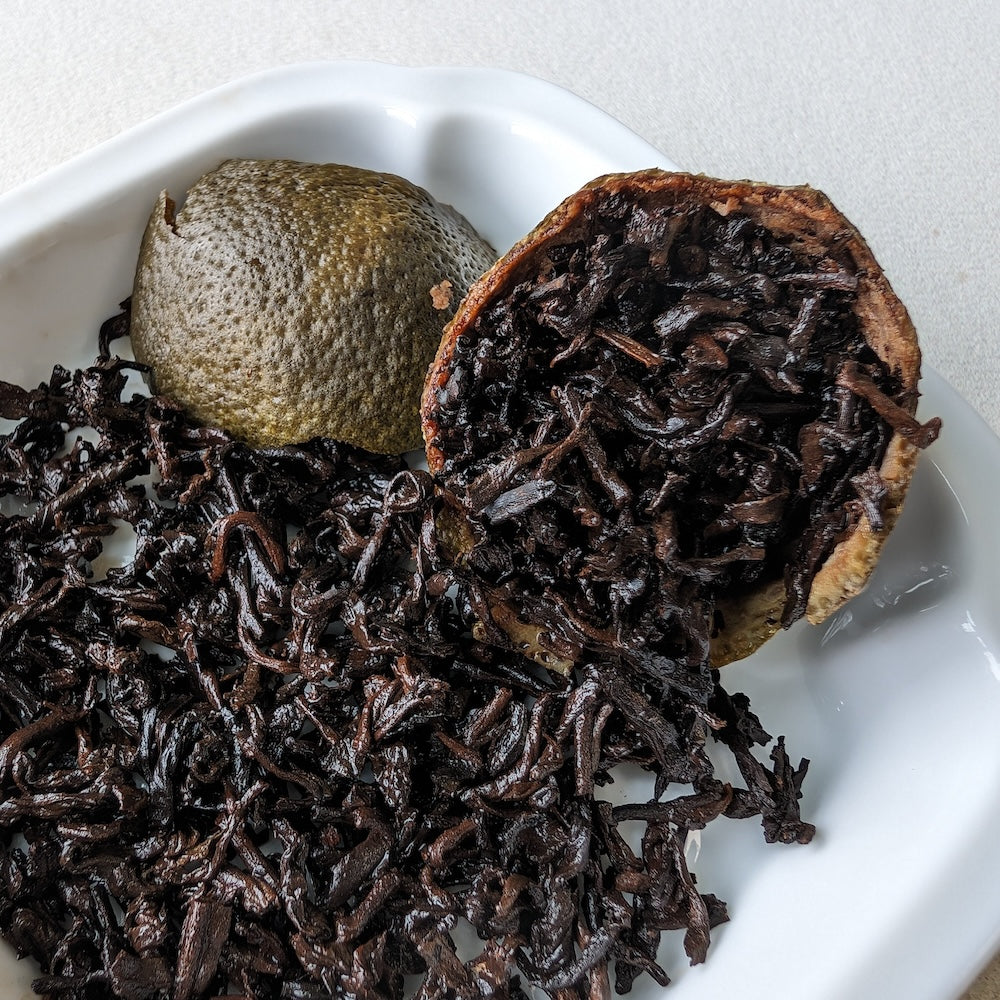
Taste is pleasant, but tea is not as strong I would have thought. For the price, definetily value for the money though.
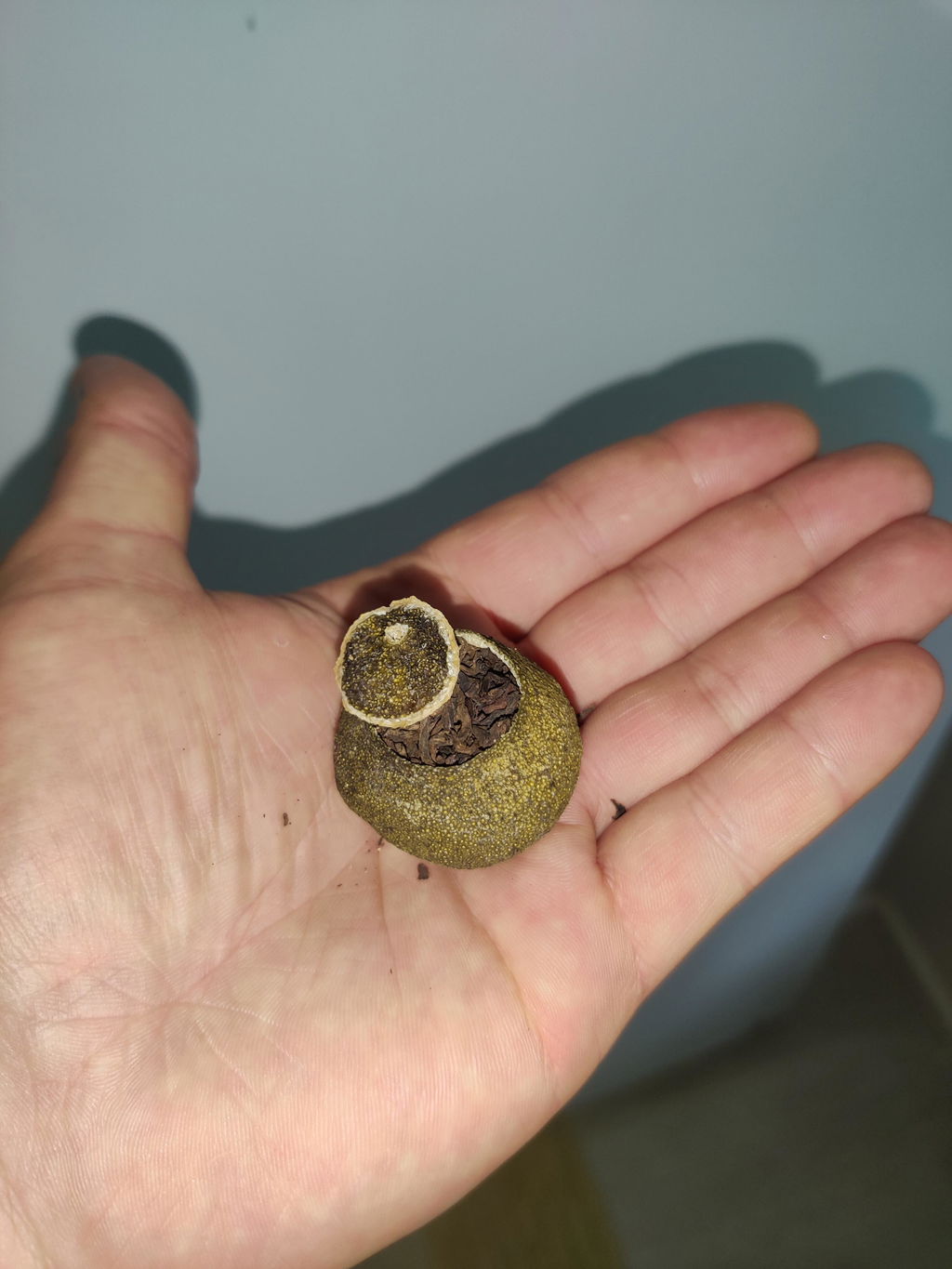
Thank you for your review! With this tea, we sourced a ripe pu erh tea that is somewhat more lightly post-fermented to achieve a certain balance between the earthiness of ripe pu erh and the fragrance of the fruit. So you can consider this a milder, more delicate Xiao Qing. You may tweak the steeping parameters to get a stronger brew, but we think the 'Fortune xiao qing gan', might suit you better.
The exterior, freshly unwrapped, is already quite captivating. This small, whole, dark green tangerine appears with an even smaller peel cap on top and a strong, fragrant citrus aroma, albeit with an underlying hint of the earthy notes typical of ripe Puerh. Using the Gongfu method at a temperature of 98°C, starting at about 90 seconds and then decreasing, the first infusion releases a citrus aroma, while camphorous notes develop from the tea leaves.
The color ranges from deep amber to red, and the perfect blend of citrus and tea is evident once again in the taste: the mandarin aroma is balanced by the tea's earthy, tobacco, and chocolate notes, which emerge in the middle stage, giving way to the typical sweetness of the dried fruit, which then returns to the citrus in the lingering aftertaste. Proceeding with successive infusions, the smoothness and sweetness of the Puerh grow in intensity and pleasure. It's a complete sensory experience that engages not only the taste and smell, but also the sight.
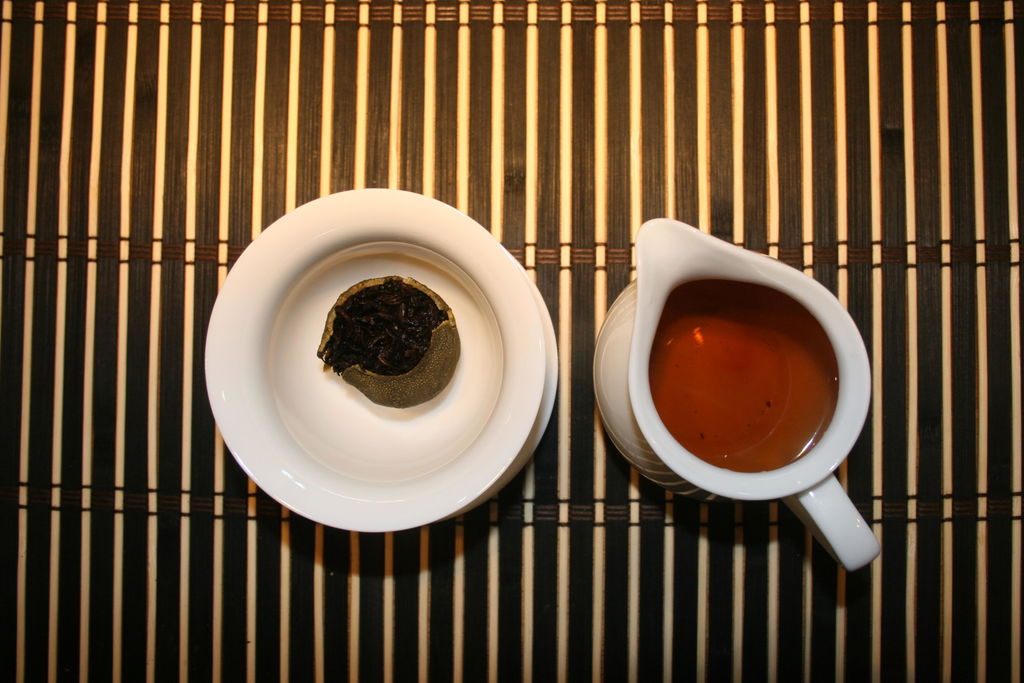
Realy good Xiao Qing Gan. Love the flavour of the pu Erh tea with the citrus flavour.
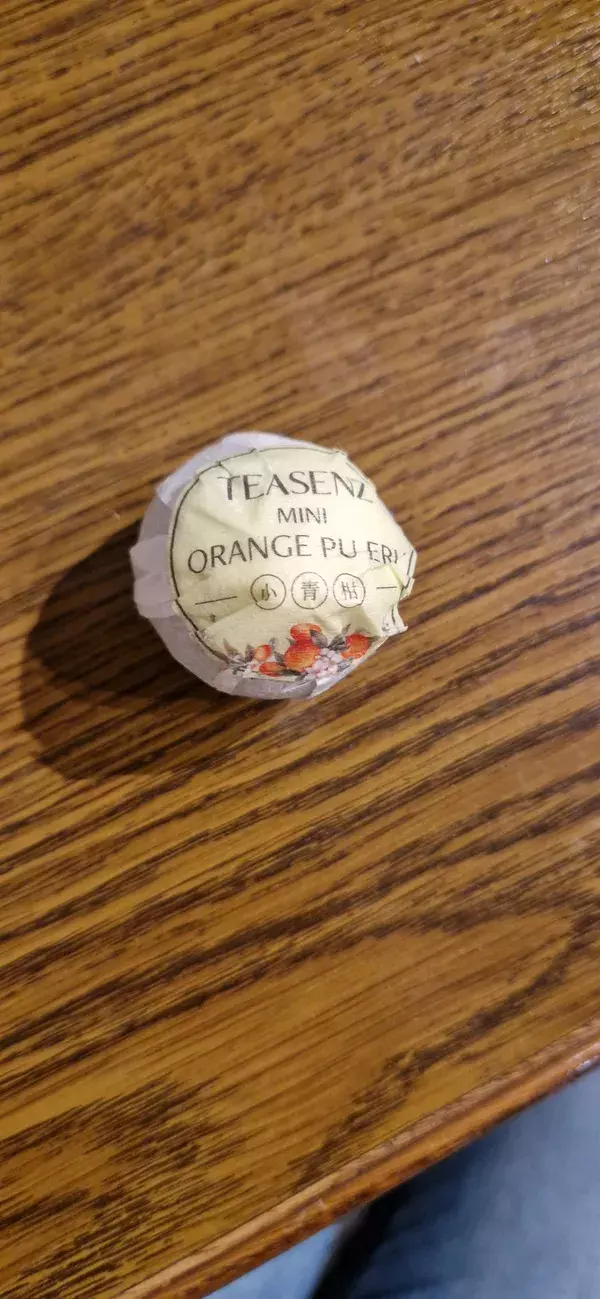
Nice twist on pu erh! The tangerine gives it a fresh touch. I expected it to be a bit more citrusy, but this is also my first time trying this type of pu erh.
Very good—it has a strong flavor and a good infusion time.
This is a great shu pu erh. The tangerine gives it a refreshing citrusy touch. It is also very easy to brew!
I really enjoyed this tea!!
Erg leuk. Kleine mandarijntjes. De hele dag thee met één mandarijntje. Blijft lekker ook! Zeer kort trekken is het lekkerst, anders wordt de ther wel erg aards. Maar niet bitter! Het was even puzzelen hoe het mandarijntje tussen twee koppen te bewaren. Uiteindelijk uitgekomen op thee zetten met afgemeten water in een theepot. Daarna gewoon mandarijntje in de theepot laten zitten. Zonder water... Goed voor zeker 4 grote koppen. Misschien wel meer.
Tip Quality Pu Ehr
Sehr Lecker 😋
Great composition combining rich taste of puer and the xiao pi tase - deep, fruity, for me - christmassy.
Lovely gentile fruti Pu-Ehr. round, with a little orange. lasts me through the day!
Hi Bas, we're glad you liked it! One of the things we like about xiao qing gan is that it doesn't release all its fragrance at once. As it's well aged and the orange aroma is fully absorbed, both the pu erh tea and the orange peel aroma has great endurance.
Delicious tea with a little orange taste
The fruit of the orange and the earthy flavour of the tea is well balanced and makes a nice sensation in the mouth. Even my father, who is not much into tea really enjoys it.
Really like these chenpi teas - high quality stuff
Excellent tea! Love it! The aroma of tangerine is amazing and the taste is really good! Totally recommended! You can brew it many times!

Notre travail de design s'inspire de l'œuvre « Le long de la rivière pendant le Festival Qingming » de Zhang Zeduan, datant de la dynastie Song. Au lieu de représenter la vie quotidienne des habitants de la capitale chinoise (comme dans l'œuvre originale), nous illustrons le processus de fabrication du thé par les agriculteurs, adoptant la même perspective à vol d'oiseau.
En observant notre design d'emballage en détail, les amateurs de thé pourront découvrir les étapes de production : les cultivateurs cueillant, séchant, roulant et torréfiant les feuilles de thé. Le thé est ensuite dégusté dans un pavillon, puis transporté par des chevaux le long de « l’ancienne route du thé ».
L’alliance entre le paysage traditionnel chinois et le thème de la fabrication du thé symbolise l'héritage, la tradition et le respect pour le dur labeur des cultivateurs de thé.