
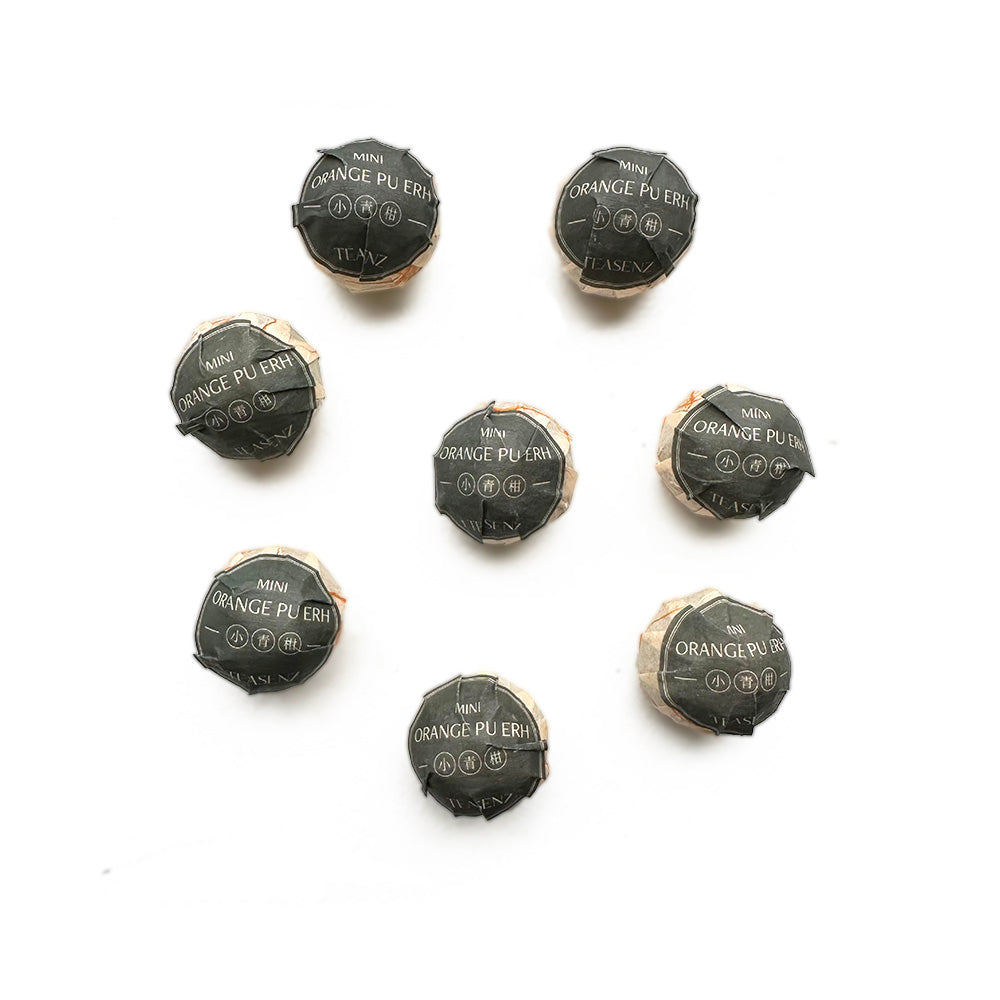
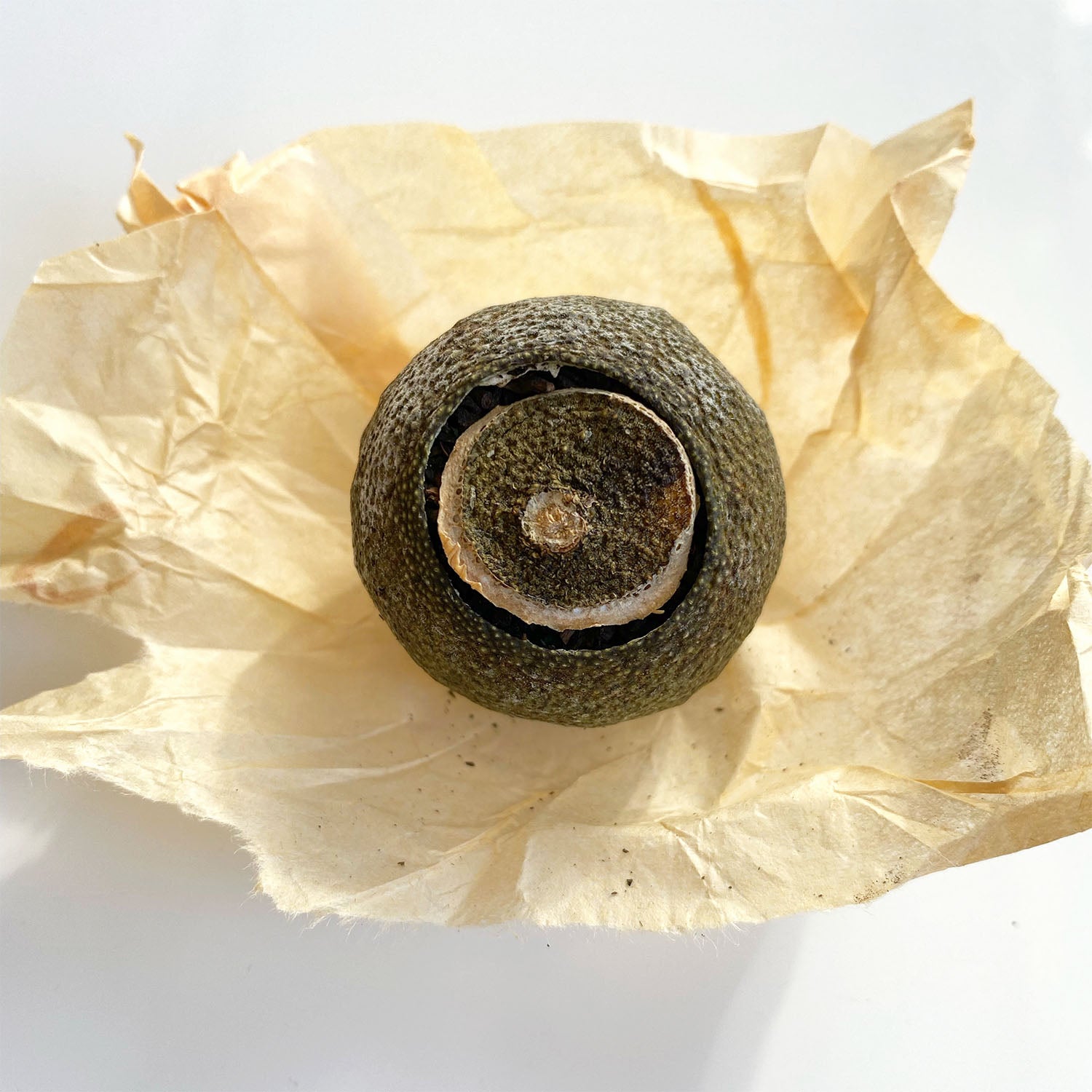
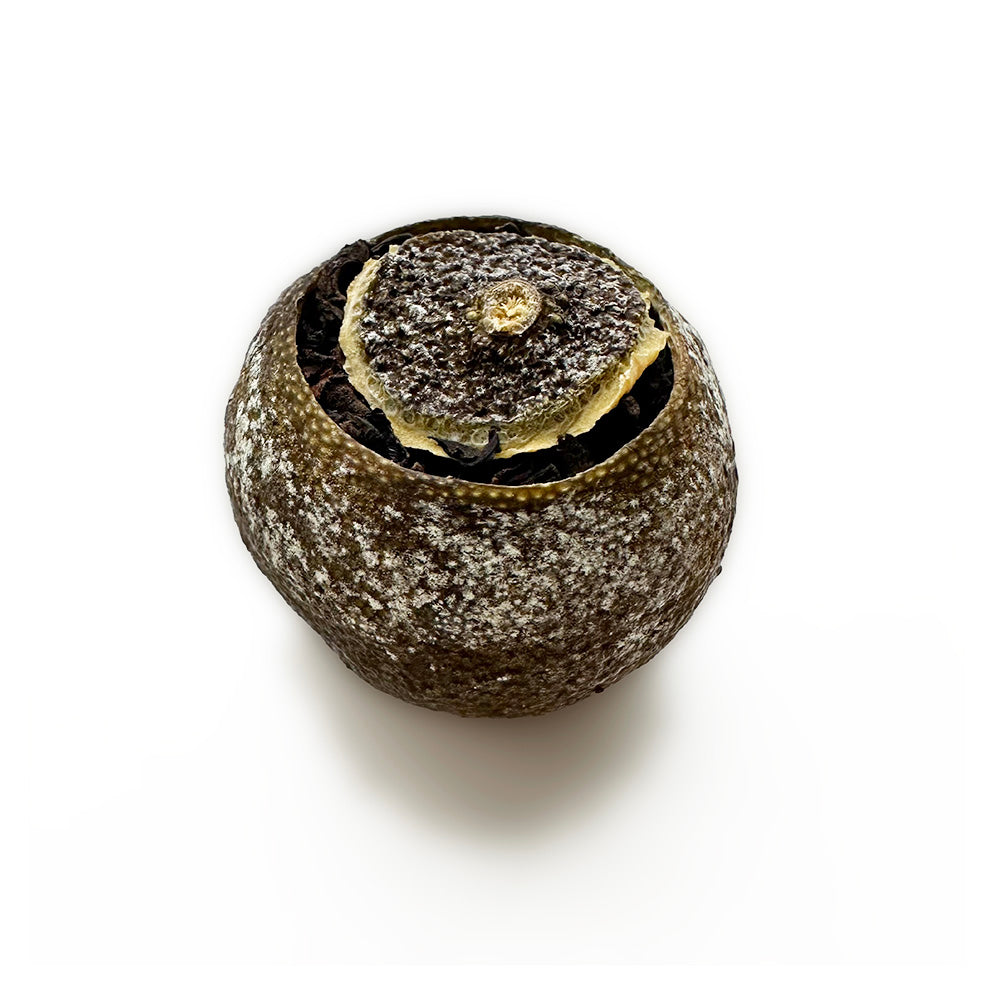
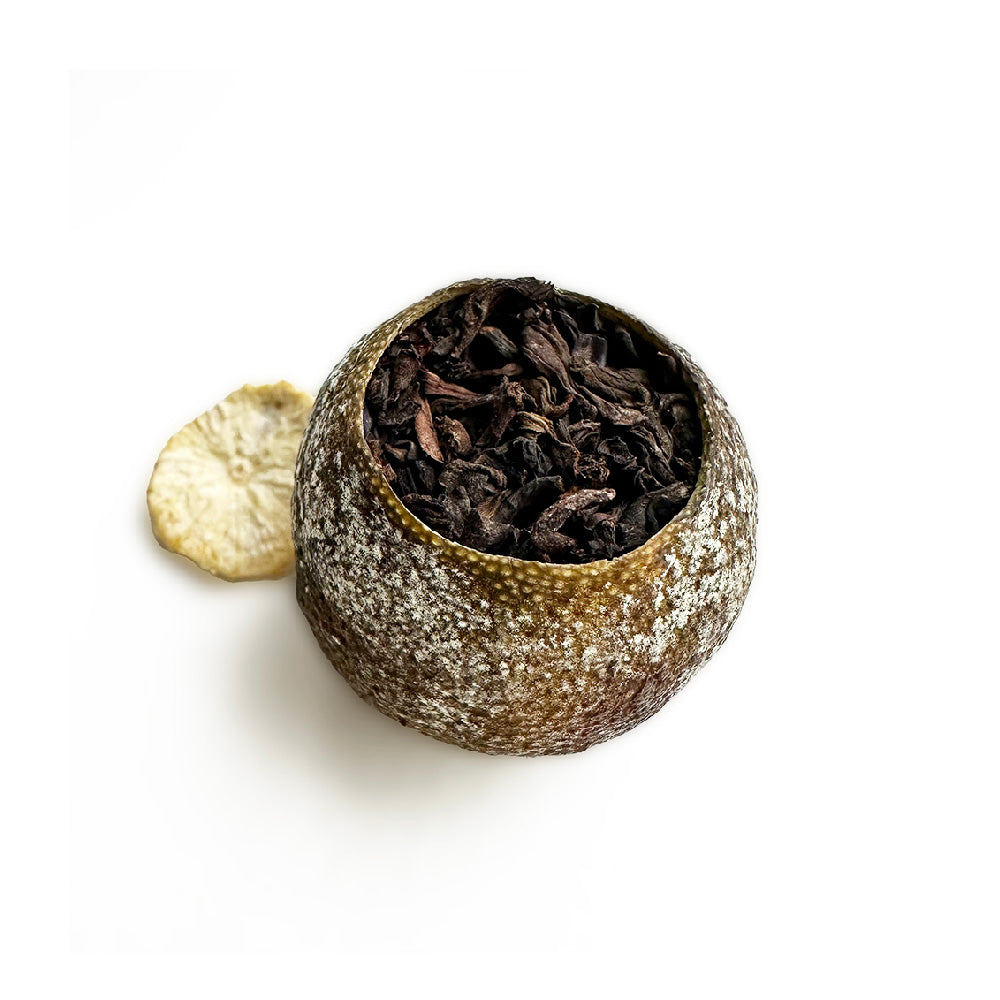
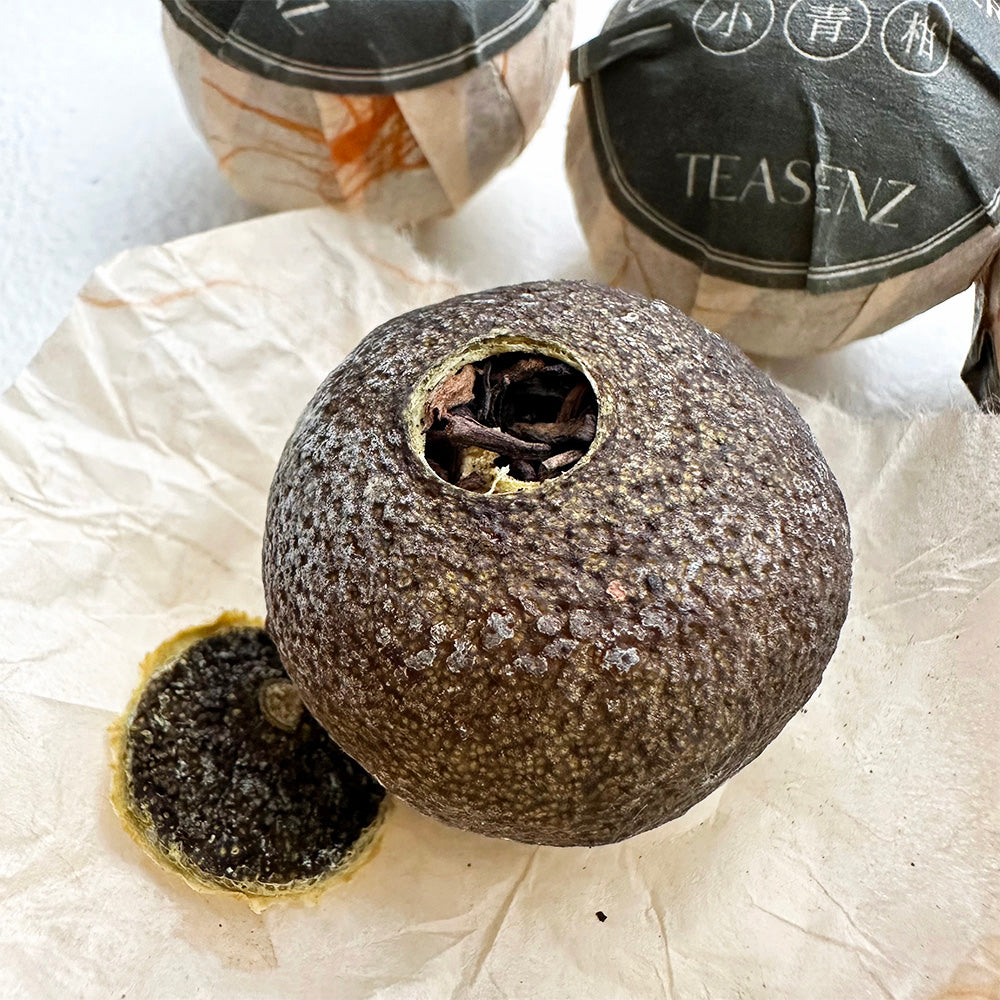
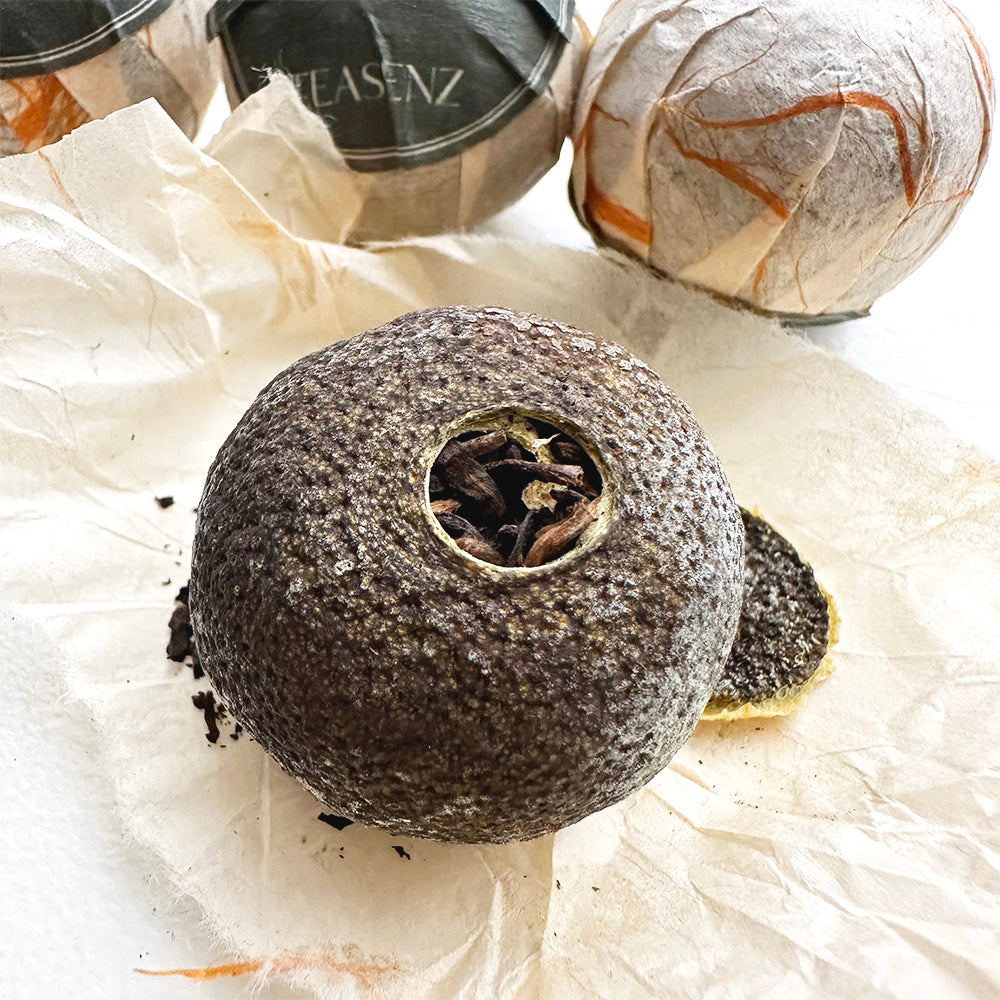
Mini Orange Farcie au Pu Erh (Xiao Qing Gan)
Mini Orange Farcie au Pu Erh (Xiao Qing Gan)
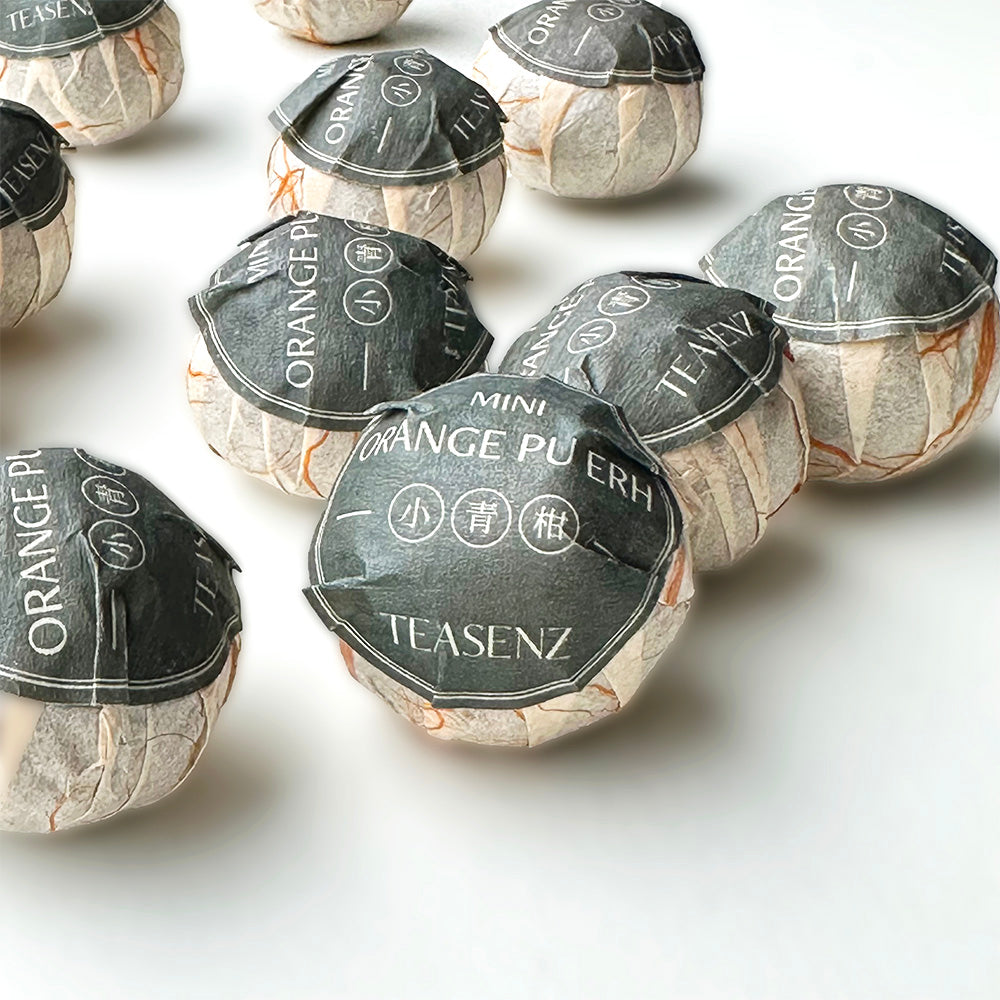
Une petite mandarine verte de Xin Hui farcie de thé pu erh cuit, équilibrant parfaitement l'arôme terreux du pu erh avec la saveur fruitée de l'écorce d'orange.
Nous vous recommandons fortement de lire nos instructions d'infusion pour équilibrer de manière optimale les saveurs que ce thé a à offrir.
Les mandarines utilisées pour ce Xiao Qing Gan proviennent du Xinhui (province du Guangdong) : une région bien connue spécialisée dans la production de ces petites oranges depuis plus de mille ans. Utilisées à l’origine en médecine traditionnelle chinoise, ces oranges sont efficaces contre les maux de gorge et les problèmes d’estomac, tout en facilitant la digestion.
Ces dernières années, ils sont également populaires à boire avec du pu erh cuit. Ces oranges sont appelées «Xiao Qing Gan» (petite orange verte), «Gan Pu» (écorce d'orange séchée pu erh) ou «Chenpi Puer» (écorce d'orange vieillie pu erh) en Chine.
Origin
Origin
- Origine : Xin Hui et Menghai
- Année : 2023
How to Steep
How to Steep
Steep one little mandarin in 500ml water at 100ºC for 4 minutes. This will result an optimal balance between the flavour of ripe pu erh and orange peel.
For the second steep, you can shorten the steeping time to 2 minutes. Then for every next steep, you can increase the steeping time by 1 minute.
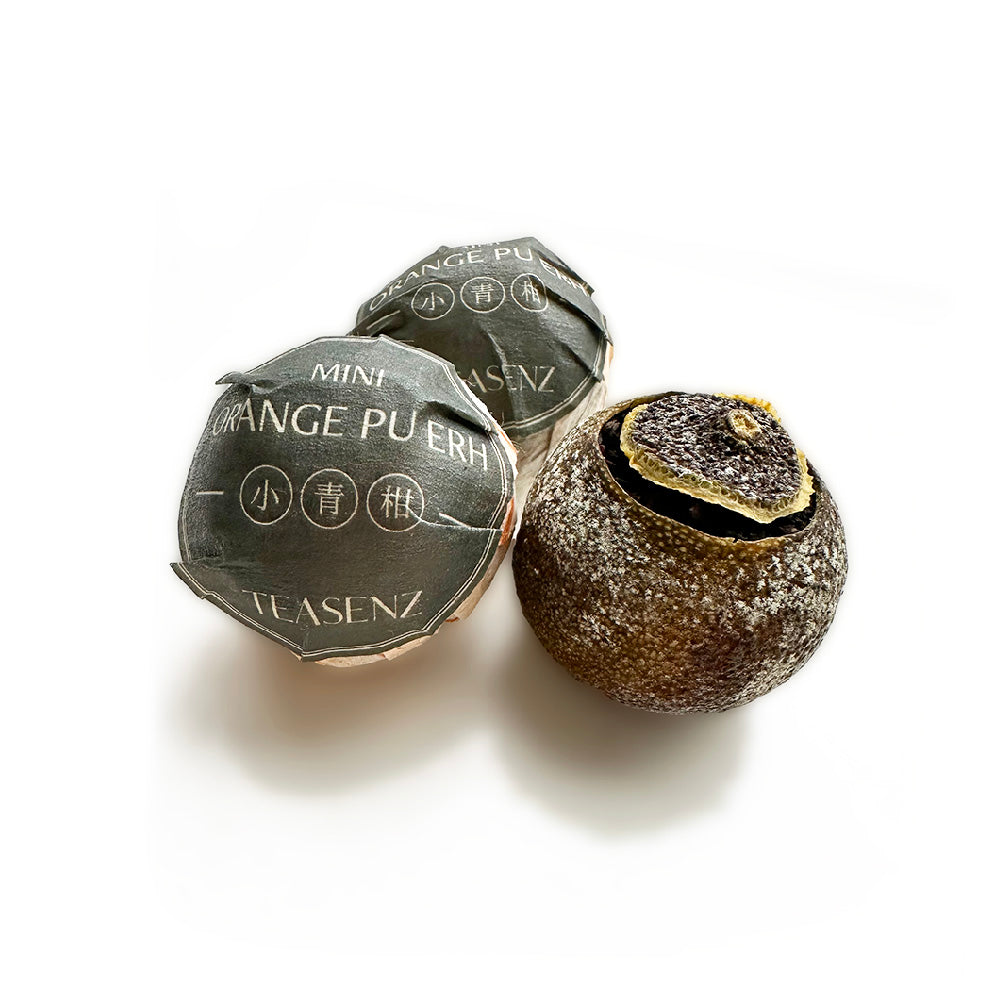

Our design work is inspired by the artwork “Along the River During the Qingming Festival” by the Zhang Zeduan in the Song Dynasty. Instead of displaying the daily lives of people in the capital of China (as the original artwork), we display the tea making process of farmers through the same bird’s eye perspective.
When examining our packaging design in detail, tea enthusiasts will observe the tea making process, featuring tea farmers picking, drying, rolling, and frying tea leaves. The tea is then tasted in a pavilion and transported by horses along the ‘ancient tea road’.
Together, the traditional Chinese landscape and tea making theme, symbolise heritage, tradition, and respect for hard work of tea farmers.