


2019 Menghai Galette de Thé Pu Erh Cuit Bourgeon d'Or 100g
2019 Menghai Galette de Thé Pu Erh Cuit Bourgeon d'Or 100g
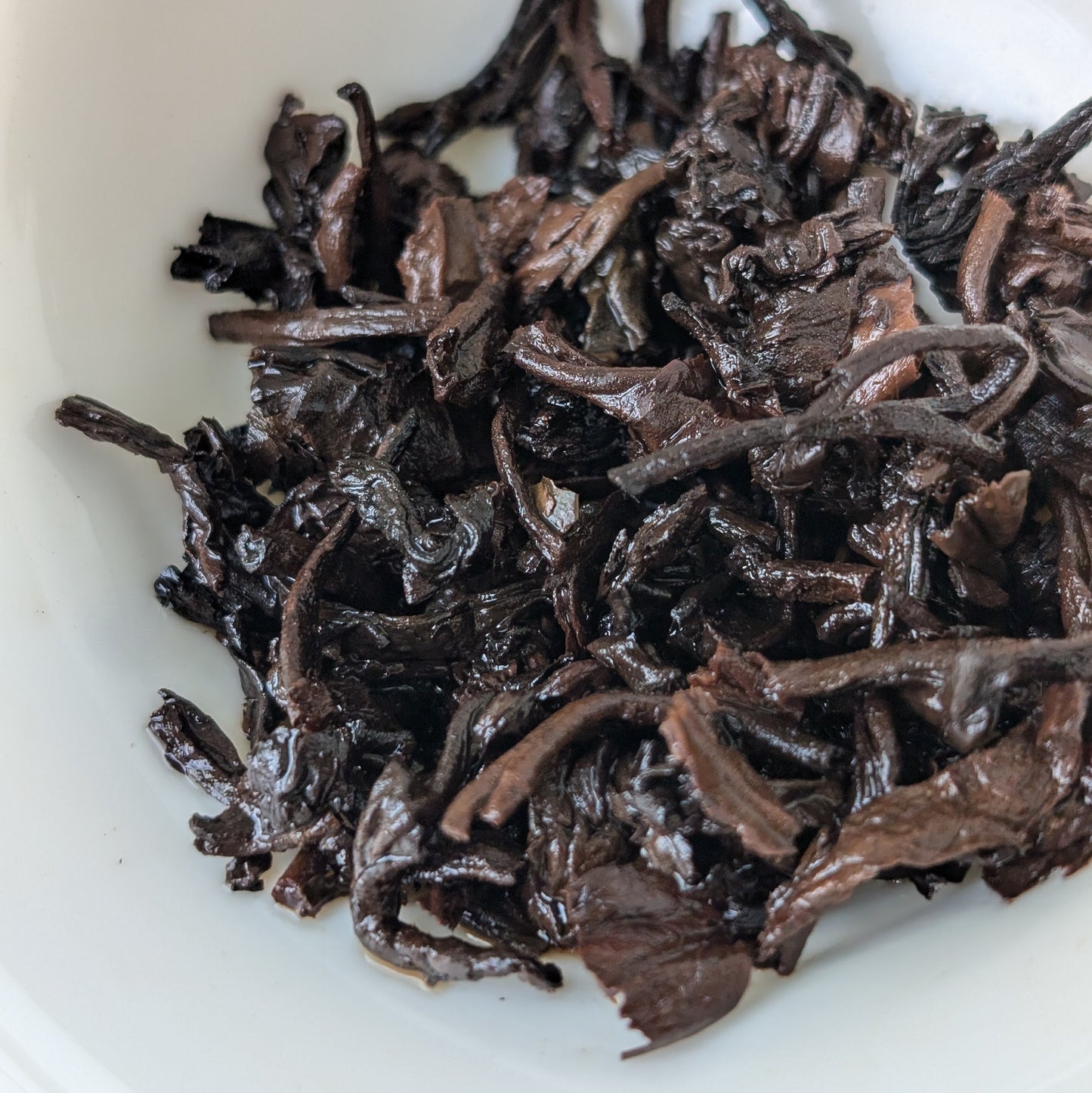
Cette petite galette de thé Pu Erh cuit (100g) est faite de petites feuilles et de bourgeons dorés de la région de Menghai, offrant un goût relativement léger et subtil. Les premières notes de noisette, boisées et florales évoluent gracieusement en une arrière-saveur sucrée évoquant les fruits séchés et les bonbons à base de plantes. C'est le contraste saisissant entre le goût d'ouverture et l'arrière-goût qui rend ce thé Pu Erh cuit spectaculaire.
Qui devrait acheter ce thé Pu Erh cuit ?
Idéal pour ceux qui préfèrent un Pu Erh cuit plus discret, sans les notes terreuses prononcées, cette galette de thé est également parfaite pour ceux qui sont rebutés par l'arôme "poissonneux" souvent associé au Pu Erh cuit. De plus, si vous appréciez habituellement le thé noir et êtes curieux du Pu Erh cuit, cette galette constitue une excellente introduction pour commencer votre voyage.
Origin
Origin
- Année : 2019
- Saison : Printemps
- Origine : Menghai, Yunnan
- Qualité des feuilles : thé d’arbre (qiao mu)
- Variété (cultivar) : grande feuille Assamica (Da Ye Zhong)
- Date de production : 18 mai 2019
- Type : mûr (shu)
- Forme : galette de thé pu erh
- Poids : 100g
How to Steep
How to Steep
How to make this golden bud ripe pu erh tea cake?
There are two methods to prepare this pu erh tea cake :
Gongfu brewing
Brew 5 gram with 100 ml of water at 100 °C. Apply for 10 seconds for the first 3 steeps and add 5 seconds for each next infusion.
Western brewing
Steep 3 gram with 350 ml of water at 100 °C. Apply a brewing time of 2 minutes and add 1 minutes for every next infusion.



Our design work is inspired by the artwork “Along the River During the Qingming Festival” by the Zhang Zeduan in the Song Dynasty. Instead of displaying the daily lives of people in the capital of China (as the original artwork), we display the tea making process of farmers through the same bird’s eye perspective.
When examining our packaging design in detail, tea enthusiasts will observe the tea making process, featuring tea farmers picking, drying, rolling, and frying tea leaves. The tea is then tasted in a pavilion and transported by horses along the ‘ancient tea road’.
Together, the traditional Chinese landscape and tea making theme, symbolise heritage, tradition, and respect for hard work of tea farmers.