


2010 Ancient Gate Galette de Thé Pu Erh Cru Vieilli de Yiwu 200g
2010 Ancient Gate Galette de Thé Pu Erh Cru Vieilli de Yiwu 200g
Impossible de charger la disponibilité du service de retrait
La texture est douce et charpentée, avec une douceur fruitée qui capture le passage patient du temps dans les meilleures feuilles de Yiwu. Dépourvu d'amertume médicinale, ce pu erh est profondément réconfortant. Il est aussi facile à apprécier qu'une conversation entre amis, à l'abri dans une cour tranquille derrière les portes de l'ancienne Pingyao.
Apparence & Goût
Il est rare de trouver un vieux pu erh cru ayant mûri aussi proprement. Les feuilles de printemps 2010 ont pris de la couleur, les bourgeons sont devenus d'une douce teinte dorée, et la surface de la galette présente un éclat uniforme et légèrement huileux, signe d'un vieillissement régulier.
Dans la tasse, il penche vers le sucré et le fruité, avec un corps doux et rond. Le vieillissement a atténué l'astringence et l'amertume originelles, laissant une profondeur douce et une douceur persistante qui reste en bouche. Réconfortant, équilibré et remarquablement abordable pour un sheng vieilli.
Récolte & Fabrication
- Récolte : Cueillies à la main au printemps 2010
- Fabrication : Transformées en maocha (pu erh en vrac)
- Vieillissement : Vieilli 14,5 ans en vrac pour une maturation uniforme de l'intérieur vers l'extérieur
- Pressage : Étuvé et pressé à la pierre en galettes en novembre 2025
Parce que le thé a mûri sous forme de maocha en vrac pendant la majeure partie de sa vie, son vieillissement est remarquablement uniforme, pas seulement "vieilli en surface". Il se déguste déjà magnifiquement maintenant, mais il a aussi encore du potentiel pour continuer à évoluer.
Emballage
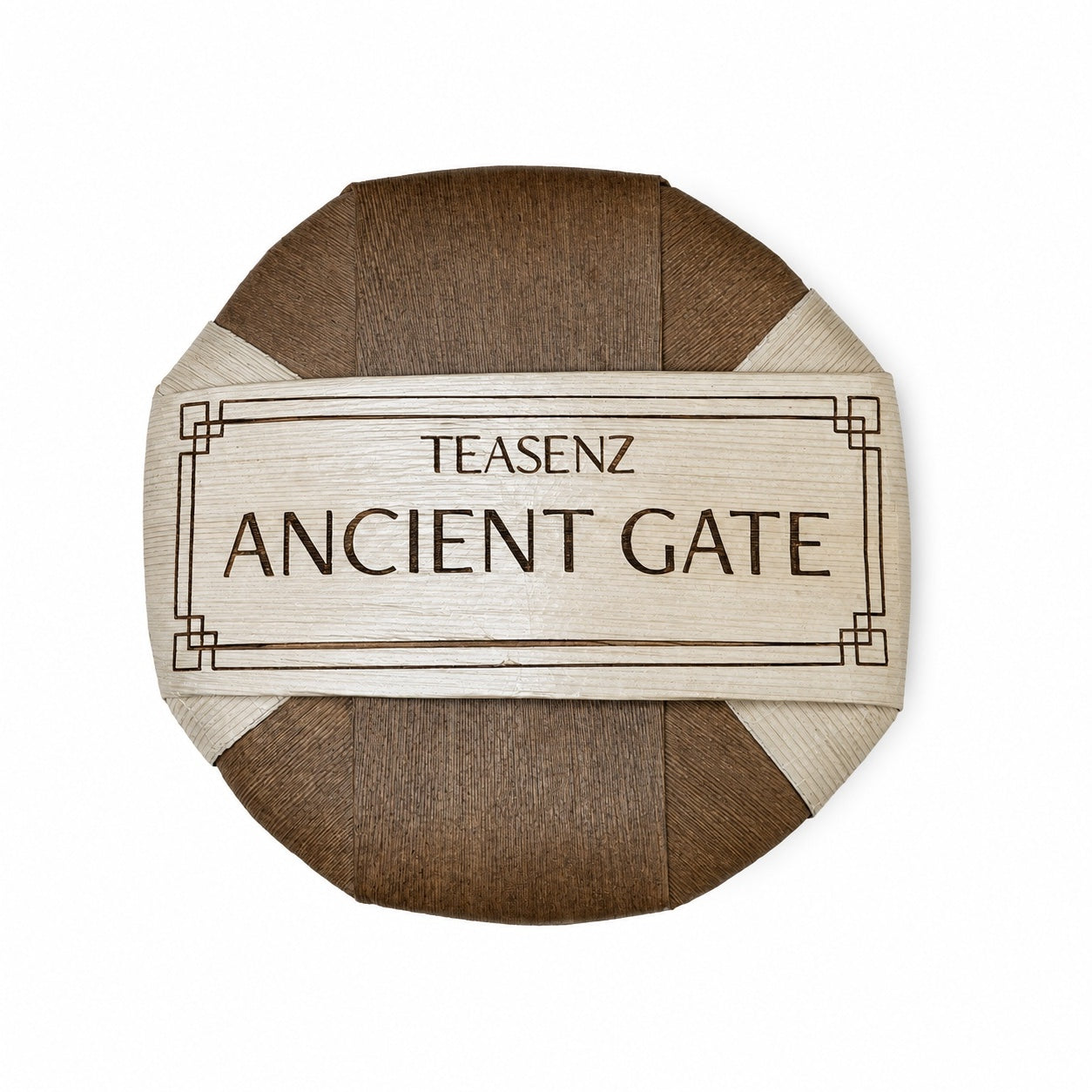
Chaque galette est doublement emballée dans deux couches de papier respirant pour favoriser un vieillissement ultérieur. Les lots de cinq galettes sont ensuite enveloppés dans une autre couche protectrice et finis avec une gaine en bambou séché pour protéger le thé pendant le stockage et le transport.
Design : L'Ancienne Cité de Pingyao
L'étiquette "Ancient Gate" est un clin d'œil à Pingyao, la cité fortifiée dont les imposantes portes encadraient autrefois le mouvement du thé, de l'argent et des personnes le long des routes commerciales entre Xi'an et Pékin. Au XIXe siècle, Pingyao a contribué à alimenter le commerce du thé en Chine grâce à ses banques de traite piaohao, finançant les longs voyages qui transportaient le thé du sud vers les frontières du nord et au-delà. Aujourd'hui, cette même cité ressemble à un musée vivant, où des murs de pierre préservés et des maisons de thé à cour invitent à un rythme plus lent et à une dégustation plus contemplative. Dessiné à la main par notre artiste Suyi dans le style de la peinture à l'aquarelle chinoise (水墨画). Il est si beau qu'il mériterait presque d'être encadré sur votre mur. Le design capture ce thème d'endurance et de prospérité tranquille, un rappel que, comme Pingyao elle-même, un pu erh bien fait est bâti pour durer, gagnant en caractère et en valeur avec le travail du temps.
Origine : Yiwu (1800m)
Ce thé provient de la montagne Yiwu à Xishuangbanna, Yunnan, à environ 1800m d'altitude. Yiwu est l'une des Six Montagnes Célèbres du Thé (Yiwu, Yibang, Manzhuan, Mangzhi, Gedeng et Youle), longtemps prisée depuis la dynastie Qing comme un centre important de production et de commerce du thé. Historiquement, les thés de Yiwu voyageaient le long d'anciennes routes vers le Tibet et étaient également envoyés en tribut aux cours impériales.
Yiwu est particulièrement réputé pour son caractère doux, sa texture lisse et son arrière-goût sucré et persistant – et cette galette met en valeur ce profil classique avec des années de maturité en plus.
Origine
Origine
- Origine : Yiwu, Yunnan
- Récolte : Printemps 2010
- Quantité totale récoltée : 40 kg (200 galettes)
- Méthode de cueillette : cueillie à la main
- Compression : pressée légèrement à la pierre en novembre 2025
- Type de thé : thé cru pu erh
- Forme du thé : galette de thé
- Poids : environ 200 g
Comment préparer le thé
Comment préparer le thé
For all methods, begin by gently prying off tea leaves from the tea cake using a tea knife. This pu erh cake is loosely compressed, so working carefully will help keep the leaves intact and lead to a cleaner, more expressive brew.
This tea is very forgiving, so feel free to steep it a little longer or shorter depending on your preference. If you are unsure, start with the parameters below and adjust from there. For all methods, use freshly boiled water at 100°C.
Traditional (Gongfu) Method
Use 5 g of tea leaves with 100 ml of water in a small gongfu teapot or gaiwan. Steep the first three infusions for 10 seconds each, followed by 15 seconds for the next three steeps. After that, gradually increase the steeping time according to taste as the tea continues to open up.
Western Method
Use 3 g of tea leaves with 500 ml of water. Steep for 5 minutes, then strain and serve. This method yields a full, well-rounded cup with minimal effort.
Expédition, retours et méthodes de paiement
Expédition, retours et méthodes de paiement
Délai de livraison : 2 à 5 jours pour la France, 2 à 3 jours pour la Belgique et le Luxembourg, et 4 à 10 jours pour la Suisse. Pour les autres pays, consultez notre page consacrée à la livraison.
Pas de taxes d’importation dans l’UE : nous expédions depuis notre entrepôt situé dans l’UE. Les clients résidant dans un pays de l’UE ne paient pas de taxes d’importation à la livraison. Toutes les taxes applicables sont déjà incluses dans nos prix. Pour les commandes de plus de 65 CHF à destination de la Suisse, des taxes peuvent s’appliquer.
Livraison gratuite : à partir de 65 € vers la France, la Belgique, le Luxembourg, l’Allemagne, les Pays-Bas et l’Irlande. À partir de 85 € vers la plupart des autres pays de l’UE et le Royaume-Uni.
Retours : nous proposons un délai de retour de 30 jours.


How this raw pu erh tea is made
-
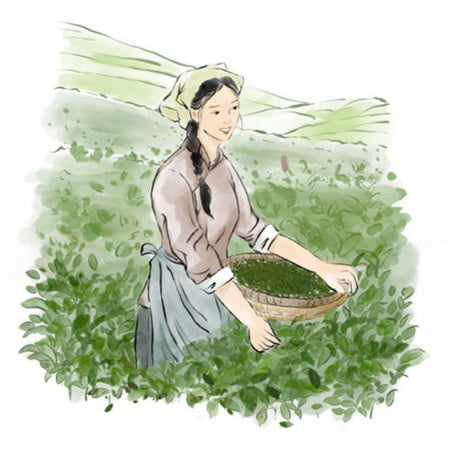
Picking
Tea leaves are hand-picked in the morning.
-
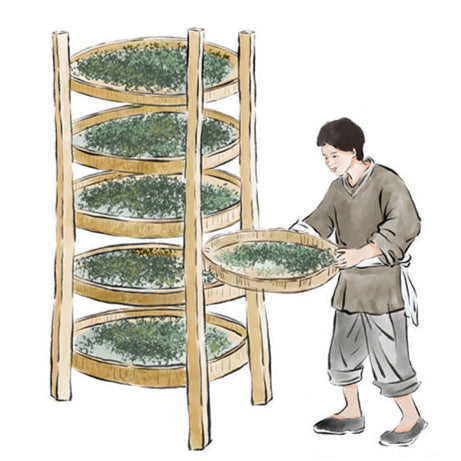
Withering
The leaves are spread on bamboo trays to wither.
-
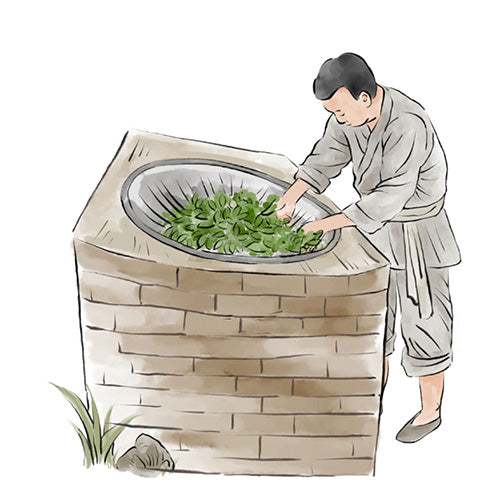
Fixation
The withered leaves are heated to halt oxidation.
-
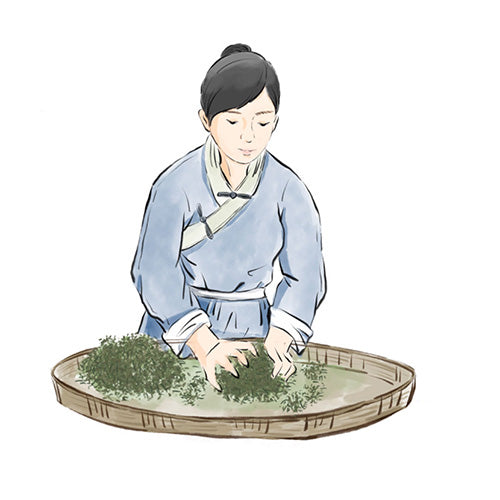
Rolling
The tea leaves are rolled to release their aroma.
-
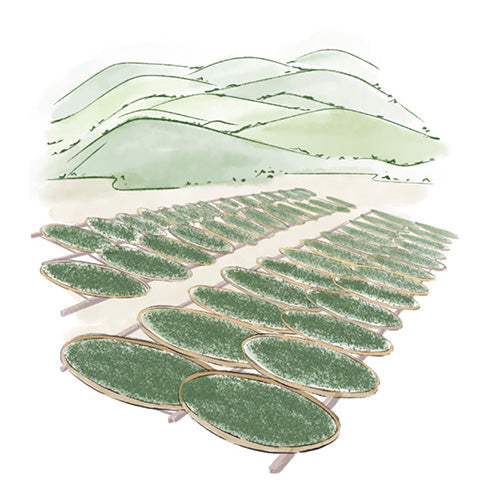
Sun Drying
Rolled leaves are spread on bamboo mats to sun-dry.
-
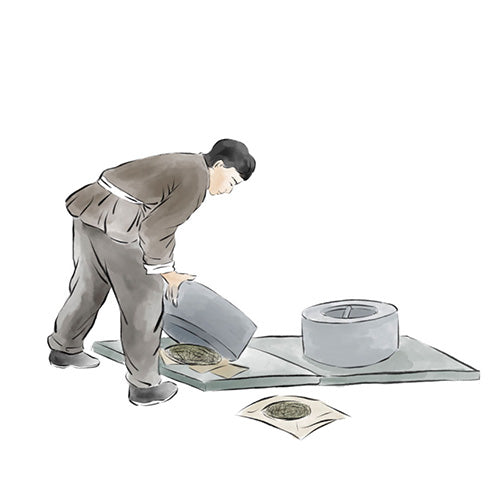
Pressing
The processed tea leaves are steamed & compressed.
-
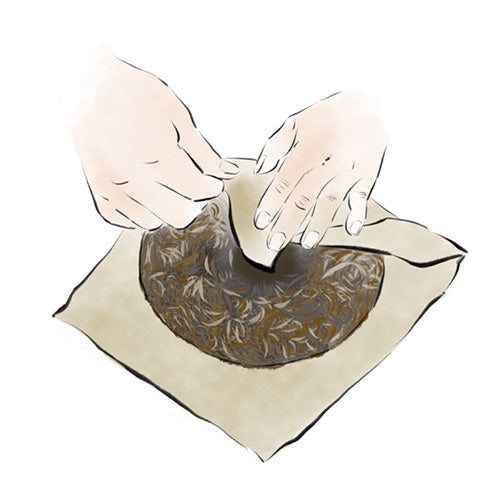
Packaging
The compressed tea is wrapped in paper & packed in boxes.
-
Aging
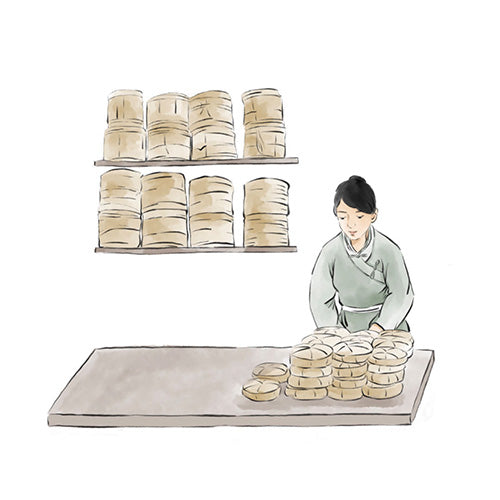
The raw pu erh tea is stored for further aging.
