


2014 Foyuan Jin Jun Cuit
2014 Foyuan Jin Jun Cuit
Impossible de charger la disponibilité du service de retrait
Galette de thé pu erh cuit de printemps provenant des jardins de thé naturels de Menghai. Profil de goût : caramel salé, jujube, épices.
Origin
Origin
- Année : 2014
- Saison : Printemps
- Origine : Menghai
- Qualité des feuilles : jardins de thé naturels
- Variété (cultivar) : grande feuille Assamica (Da Ye Zhong)
- Date de production : 41890
- Lot : 1
- Compression : moyenne
- Type : mûr (shou)
- Marque : Foyuan
- Série/recette : Jin Yun (Rime d’Or)
- Forme : galette de thé pu erh
- Poids : 357g
Shipping, Returns & Payment Methods
Shipping, Returns & Payment Methods
Délai de livraison : 2 à 5 jours pour la France, 2 à 3 jours pour la Belgique et le Luxembourg, et 4 à 10 jours pour la Suisse. Pour les autres pays, consultez notre page consacrée à la livraison.
Pas de taxes d’importation dans l’UE : nous expédions depuis notre entrepôt situé dans l’UE. Les clients résidant dans un pays de l’UE ne paient pas de taxes d’importation à la livraison. Toutes les taxes applicables sont déjà incluses dans nos prix. Pour les commandes de plus de 65 CHF à destination de la Suisse, des taxes peuvent s’appliquer.
Livraison gratuite : à partir de 65 € vers la France, la Belgique, le Luxembourg, l’Allemagne, les Pays-Bas et l’Irlande. À partir de 85 € vers la plupart des autres pays de l’UE et le Royaume-Uni.
Retours : nous proposons un délai de retour de 30 jours.


Comment infuser le thé Jin Yun ripe pu erh tea
-

Méthode normale/occidentale
Acheter des théières / tassesTempérature : 100 °C
Durée : 2-3 minutes
Thé/eau : 3 grammes / 500 ml d'eau
Ustensiles à thé : grande théière / tasse
-

Méthode traditionnelle/gongfu
Acheter des GaiwansTempérature : 100 °C
Temps : 15 secondes
Thé/eau : 5 grammes / 100 ml d'eau
Ustensiles à thé : Gaiwan / théière Yixing
-

Infusion à froid
Acheter des bouteilles pour infusion à froidTempérature : Conserver au réfrigérateur
Durée : 8 heures
Thé/eau : 6 grammes / 1 litre
Ustensiles à thé : Bouteille / Pichet


How this white tea is made
-
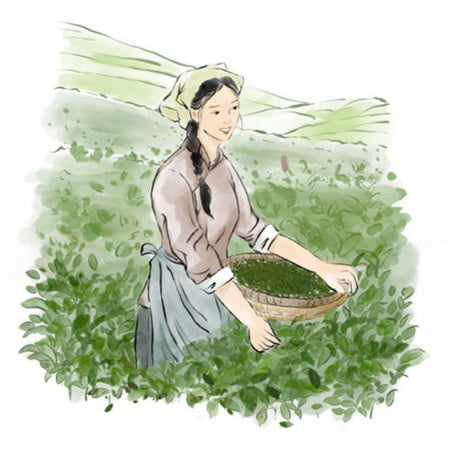
Picking
Tea leaves are hand-picked in the morning.
-
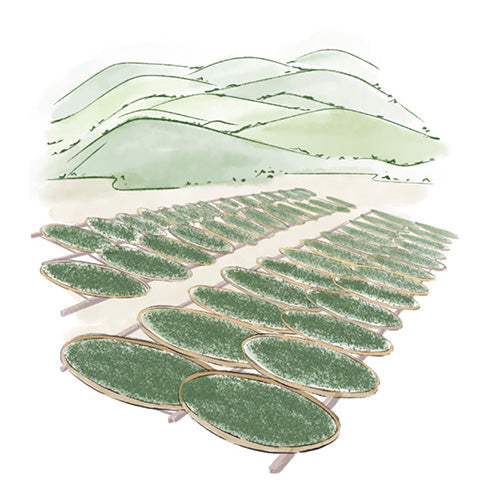
Withering
The leaves are spread on bamboo mats to wither and dry.
-
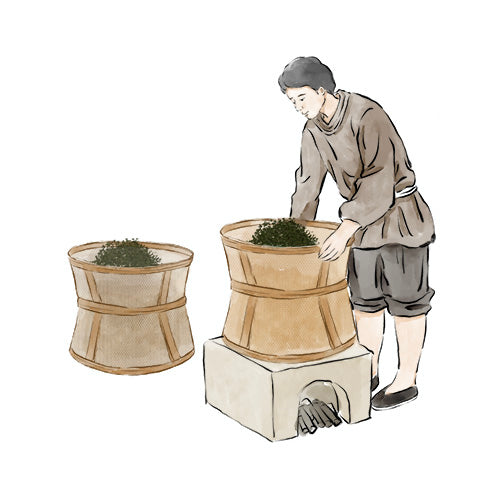
Drying
The leaves are dried over low temperatures to further reduce moisture.

Our design work is inspired by the artwork “Along the River During the Qingming Festival” by the Zhang Zeduan in the Song Dynasty. Instead of displaying the daily lives of people in the capital of China (as the original artwork), we display the tea making process of farmers through the same bird’s eye perspective.
When examining our packaging design in detail, tea enthusiasts will observe the tea making process, featuring tea farmers picking, drying, rolling, and frying tea leaves. The tea is then tasted in a pavilion and transported by horses along the ‘ancient tea road’.
Together, the traditional Chinese landscape and tea making theme, symbolise heritage, tradition, and respect for hard work of tea farmers.