


Yixing Long Gu Jin Sha Ni Clay Kyusu Teapot "Cicada & Bamboo" 180ml
Yixing Long Gu Jin Sha Ni Clay Kyusu Teapot "Cicada & Bamboo" 180ml
Couldn't load pickup availability
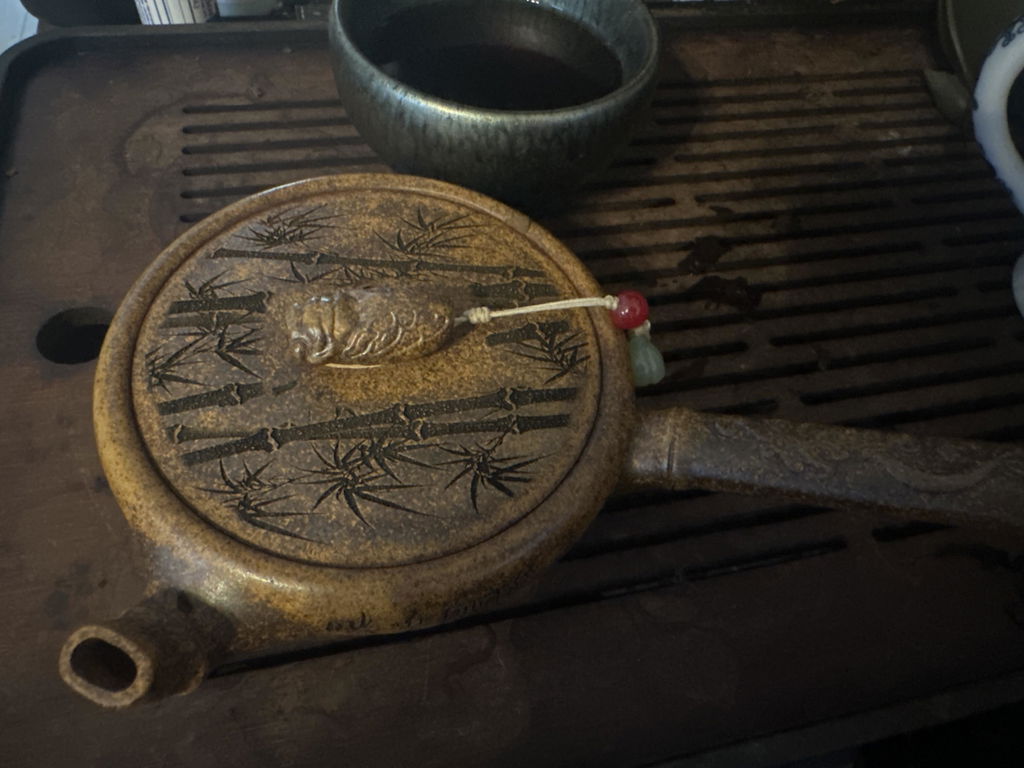
This unique handcrafted Yixing kyusu teapot features a cicada knob and a flat bamboo-engraved lid, complementing the bamboo stick shaped spout and side handle. Its ergonomic handle-spout angle ensures graceful pouring. Due to firing in a traditional dragon kiln, each teapot features an unique yellow-brown pattern.
Long Gu Jin Sha Ni (Dragon Bone Gold Sand Clay)
This rare Yixing clay is renowned for its high mineral content and golden speckles. It excels in heat retention and tea-mellowing properties, particularly when used with aged pu erh, rock oolongs and other full-bodied teas. The clay naturally develops a richer patina with prolonged use.
Cultural symbolism and design
In Chinese culture, cicada represents rebirth and immortality and is often featured in scholars' objects. Some enthusiasts keep cicadas as pets, not only for the joy of caring for them but also to savor their melodic songs. The harmonious chirping of cicadas serves as a soothing backdrop, enhancing moments of relaxation, reflection, or even the ambiance of traditional tea ceremonies. Bamboo symbolises resilience and elegance, as seen in the engraving on the lid and the bamboo stick-shaped handle and spout. The side handle design can be traced back to the tea culture of the Tang Dynasty (618–907 AD), which was later refined in Japanese kyusu teapots.
Artisan craftsmanship
The ergonomic side-handle and spout angle allows for precise control and graceful pouring. The hand-carved landscapes and calligraphy are a showcase of traditional Chinese literati aesthetics. Each piece is a unique work of functional art. It comes with a fine gift box and a certificate of authenticity.
Shipping, Returns & Payment Methods
Shipping, Returns & Payment Methods
Delivery time: EU delivery takes 1–10 days. For country-specific estimates, please see the Shipping Info page at the bottom of our website.
No import taxes: We ship from our EU warehouse. Customers in the EU will not be charged import taxes upon delivery. All applicable taxes are included in our prices.
Free shipping: From €65 to the Netherlands, Belgium, France, Germany, Luxembourg, and Ireland. From €85 to most other EU countries and the UK.
Returns: We offer a 30-day return period.


Unique, beautiful pot with quite a lot of meaning in it. A joy to use. It feels good in the hand and is very easy to use. It’s wonderful. So thankful I got this.

Authentic Tea
Teasenz.eu is a European online tea shop, specialized in high quality, authentic Chinese tea & teaware.