


2014 Dr Puer Nannuo Gu Hua Xiang Rå Pu Erh Te
2014 Dr Puer Nannuo Gu Hua Xiang Rå Pu Erh Te
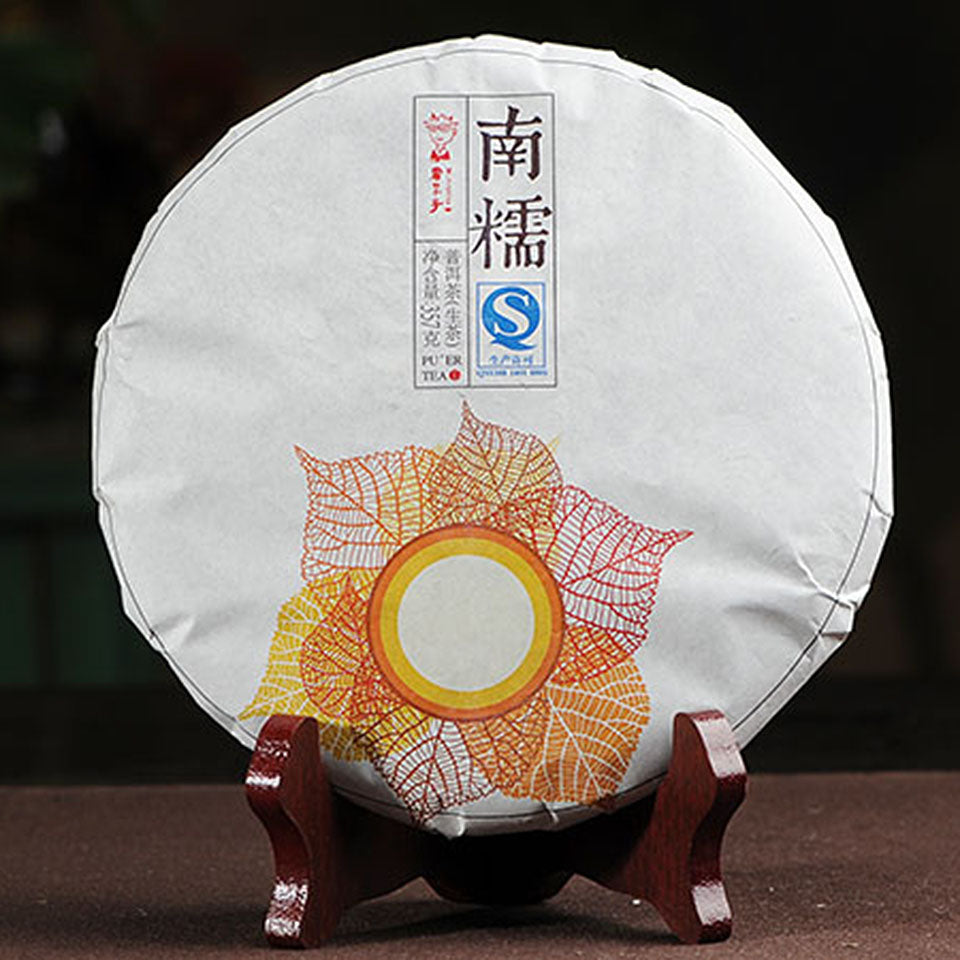
Efterårets rå pu erh kage fra vildt lysttræ (qiao mu) i Nannuo-bjerget. Smag: modne frugter; honning; appelsinskal; sukkerrør.
Oprindelse
Oprindelse
- År: 2014
- Sæson: Efterår
- Oprindelse: Nannuo Bjerg
- Bladkvalitet: vild træ (qiao mu)
- Sort (kultivar): storbladet Assamica (Da Ye Zhong)
- Produktionsdato: 41908
- Parti: 1
- Presning: middel
- Type: rå (sheng)
- Mærke: Dr Puer
- Serie/opskrift: Nannuo Gu Hua Xiang (Dale Blomst)
- Form: pu erh te-kage
- Vægt: 357g
Hvordan man trækker te
Hvordan man trækker te
How to make Dr Puer Nannuo Gu Hua Xiang (Valley Flower) tea?
There are two methods to prepare this pu erh tea cake:
Gongfu brewing
Brew 8 gram with 120 ml of water at 100 °C. Steep for 15 seconds and add 5 seconds for each infusion.
Western brewing
Steep 4 gram with 350 ml of water at 100 °C. Apply a brewing time of 2-3 minutes and add 1 minutes for each subsequent infusion.



Vores designarbejde er inspireret af kunstværket "Along the River During the Qingming Festival" af Zhang Zeduan fra Song-dynastiet. I stedet for at vise dagliglivet for folk i Kinas hovedstad (som i det oprindelige kunstværk), viser vi tedyrkningsprocessen hos bønder gennem det samme fugleperspektiv.
Når man ser nærmere på vores emballagedesign, vil teentusiaster kunne observere tedyrkningsprocessen, hvor tedyrkere plukker, tørrer, ruller og steger teblade. Teen smages derefter i en pavillon og transporteres med heste langs den 'gamle terute'.
Sammen symboliserer det traditionelle kinesiske landskab og temaet om tedyrkning arv, tradition og respekt for tedyrkernes hårde arbejde.