
Wu Niu Zao Longjing Green Tea (Luxury Tea Collection)
Couldn't load pickup availability
This unique Long Jing green tea is made from the Wu Niu Zao cultivar which sprouts earlier in the season than the classic Qunti and #43 cultivar.
Compared to the other Long Jing cultivars, the tea leaves of the Wu Niu Zao cultivar have a slightly greener appearance and the tea leaves' shape is shorter and thicker.
The aroma is true delight and unlike any Longjing we've tried so far. While the classic Long Jing and #43 cultivars tend to be more light in flavour, the Wu Niu Zao cultivar produces a stronger and more robust Long Jing tea. Our Wu Niu Zao longjing features a complex aroma palette of nuts, beans, milk and grass. It's also characterised by a refreshing and well balanced bitterness that quickly transforms into a sweet after taste. This tea also offers excellent endurance allow you to brew up to 15 steeps when applying the gongfu tea method.
Origin
Origin
- Brand: Teasenz
- Year: 2025
- Harvest: end of February
- Origin: Wu Niu town
- Cultivar: Wu Niu Zao
- Type: green tea
How to Steep
How to Steep
Western method
Infuse 3 grams of tea with 500ml water at a temperature of 70-80ºC and steep for 2 minutes.
Traditional method
Infuse 5 grams of tea with 100ml water at 80ºC and steep for 5 seconds.
Shipping, Returns & Payment Methods
Delivery time: 1-10 day EU delivery. For estimates per country, please visit the shipping info page at the bottom of our website.
Import taxes?: because we ship from our EU warehouse, you will NOT be charged import taxes upon delivery if you're based in the EU. All taxes are already included in our prices.
Free shipping: available for orders over €59 for The Netherlands/Belgium, €80 for other EU countries (excluding Portugal & Hungary) & UK, and over €100 for other countries.
Returns: orders can be returned for a refund within 30 days. Products should returned in unopened, unused condition.
Share
How this green tea is made
-
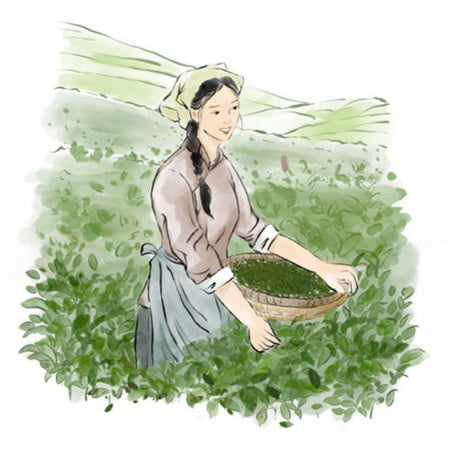
Picking
Tea leaves are hand-picked in the morning.
-
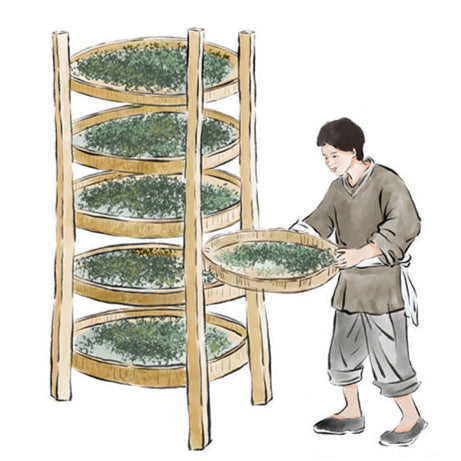
Withering
Leaves are shortly withered to eliminate some moisture.
-
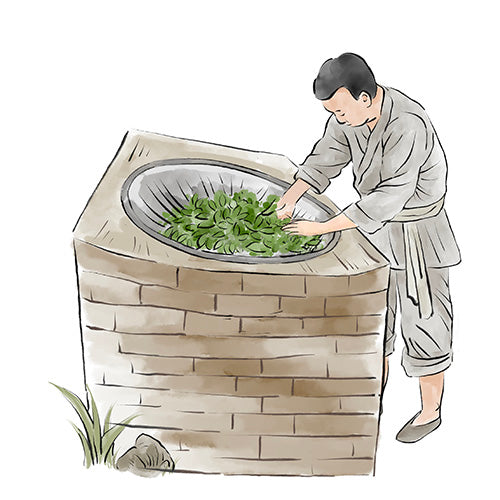
Fixation (pan-frying) & Shaping
Leaves are roasted on a wok to halt oxidation.
-
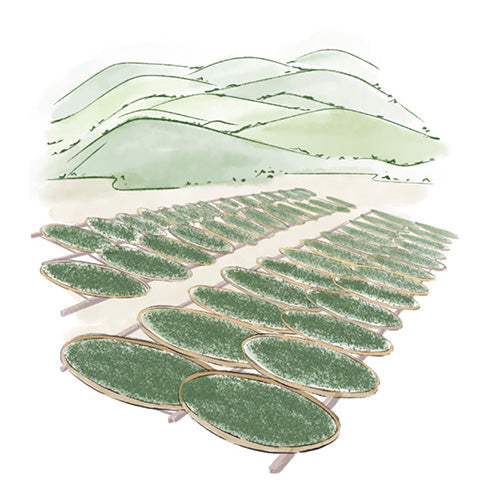
Drying
Tea leaves are dried to reduce moisture to a minimum.
This is my first Wu Niu Zao and it has a pretty unique taste. I’d read on some teas about “bean” as a tasting note, but never actually tasted it — this is the first tea that really tastes of green (soy) beans. The bean and grassy note is quite dominant and I could not pick up any nutty notes.
Although Wu Niu Zao is processed in the same style as Long Jing, it’s not a Long Jing in the true sense (more like “Long Jing style”). As a result, it differs noticeably in flavor from traditional Long Jing cultivars.
Fifteen infusions strike me as a bit much. I personally used eight (a little more than I would for classic Long Jing). Even in the later steeps it does not turn bitter, so 10+ infusions are certainly possible, depending on how faint or “watery” you’ll still enjoy your tea.
For anyone feeling experimental, a homemade blend with classic Long Jing could also be interesting to additional complexity.
Overall, this feels more like 4.5 stars than a 5. It offers a unique flavor profile but at this price point it could be a bit more complex.
Hi Ricardo, thank you so much for this super detailed review! We're glad you enjoyed it. Due to the very delicate leaves, its way more lighly processed compared to longjing. Hence, less nutty/toasty notes compared to longjing. I'm sure this review is going to be very helpful for others considering this tea.
Our design work is inspired by the artwork “Along the River During the Qingming Festival” by the Zhang Zeduan in the Song Dynasty. Instead of displaying the daily lives of people in the capital of China (as the original artwork), we display the tea making process of farmers through the same bird’s eye perspective.
When examining our packaging design in detail, tea enthusiasts will observe the tea making process, featuring tea farmers picking, drying, rolling, and frying tea leaves. The tea is then tasted in a pavilion and transported by horses along the ‘ancient tea road’.
Together, the traditional Chinese landscape and tea making theme, symbolise heritage, tradition, and respect for hard work of tea farmers.