


Herbata Premium Xiao Qing Gan (Pu Erh nadziewana mini mandarynką)
Herbata Premium Xiao Qing Gan (Pu Erh nadziewana mini mandarynką)
Nie można załadować gotowości do odbioru
Z przyjemnością przedstawiamy nasz ekskluzywny Xiao Qing Gan (小青柑), wykonany z wydrążonych zielonych mandarynek wypełnionych pierwszorzędną dojrzałą herbatą pu erh, suszonych na słońcu do perfekcji.
Każda mandarynka może zaparzyć do 2 litrów herbaty, oferując pyszny aromat skórki mandarynki aż do ostatniego parzenia.
Każdy Xiao Qing Gan waży od 10 do 14 gramów, średnio 12 gramów.
Idealna dojrzała herbata pu erh do Xiao Qing Gan
W 2018 roku herbata Xiao Qing Gan stała się tak popularna, że znalezienie wysokiej jakości egzemplarzy było niemal niemożliwe. Wraz ze wzrostem popytu chińskie marki herbaty zaczęły intensywnie oferować tę unikalną herbatę. Zamiast pozyskiwać tę herbatę, postanowiliśmy rozpocząć własną podróż, aby wyprodukować idealny Xiao Qing Gan od podstaw.
Po próbowaniu i degustacji różnych herbat Xiao Qing Gan w 2020 roku stwierdziliśmy, że wiele z nich brakowało złożoności oraz równowagi między aromatem mandarynki a dojrzałą herbatą pu erh. Niektóre miały przytłaczający cytrusowy zapach, inne były zbyt ziemiste w smaku.
Doszliśmy do wniosku, że idealna dojrzała herbata pu erh do Xiao Qing Gan powinna być mieszanką mniejszych i młodszych liści, z mniej intensywną fermentacją wtórną. Dało to bardziej złożoną, zrównoważoną i mniej ziemistą herbatę. Dodatkowo, stosując naszą wiedzę o produkcji herbaty jaśminowej, udoskonaliliśmy metodę przetwarzania dojrzałej herbaty pu erh, aby wzmocnić absorpcję cytrusowego aromatu.
Lato 2024 roku przyniosło zbiór świeżych zielonych mandarynek z regionu Xinhui w Guangdong. Mandarynki zostały oczyszczone, wydrążone i wypełnione naszą własną dojrzałą herbatą pu erh. Następnie naturalnie suszono je na słońcu, owinięto w papier i przechowywano do dalszego dojrzewania i absorpcji aromatu.
Pochodzenie
Pochodzenie
- Pochodzenie: Xin Hui i Menghai
- Rok zbioru mandarynek: 2024
- Rok zbioru herbaty: 2020
Przygotowanie herbaty
Przygotowanie herbaty
How to make Xiao Qing Gan tea?
Steep one little tangerine in 500ml water at 100ºC for 4 minutes. This will result an optimal balance between the flavour of ripe pu erh and orange peel.
For the second steep, you can shorten the steeping time to 2 minutes. Then for every next steep, you can increase the steeping time by 1 minute.
Gongfu method
If you prefer to steep a little tanginess the traditional way, then steep one Xiao Qing Gan with 100ml of water at 100ºC. Apply a steeping time of 80s, 70s, 60s, 50s for the first 4 steeps, respectively. Afterwards, you can gradually increase the steeping time for every next steep.
For more information, please visit this page: How to make Xiao Qing Gan tea
Wysyłka, Zwroty i Metody Płatności
Wysyłka, Zwroty i Metody Płatności
Czas dostawy: Dostawa w UE trwa od 1 do 10 dni. Szczegółowe informacje dla poszczególnych krajów znajdziesz na stronie Informacje o wysyłce na dole naszej strony internetowej.
Brak podatków importowych: Wysyłamy z naszego magazynu w UE. Klienci z UE nie będą obciążani podatkami importowymi przy dostawie. Wszystkie obowiązujące podatki są wliczone w nasze ceny.
Darmowa wysyłka: Od 65 € do Holandii, Belgii, Francji, Niemiec, Luksemburga i Irlandii. Od 85 € do większości innych krajów UE oraz Wielkiej Brytanii.
Zwroty: Oferujemy 30-dniowy okres na zwrot.


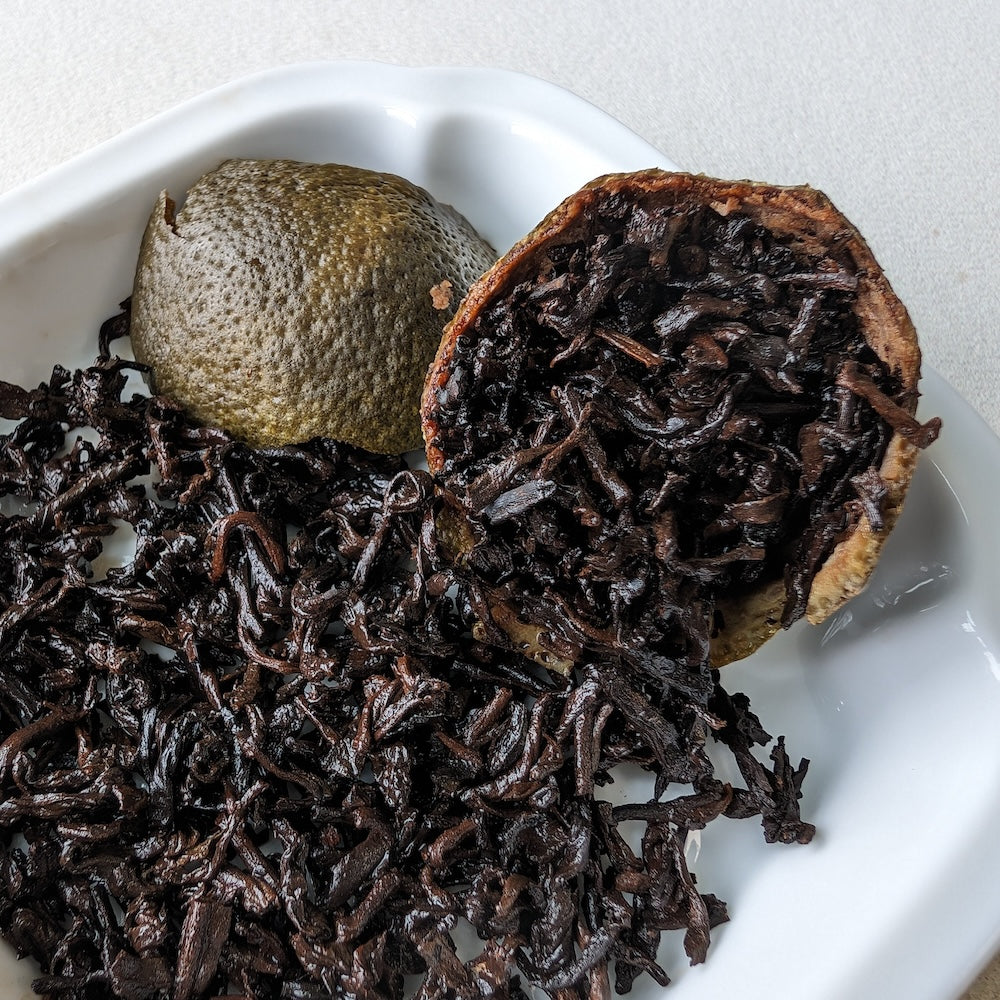
Taste is pleasant, but tea is not as strong I would have thought. For the price, definetily value for the money though.
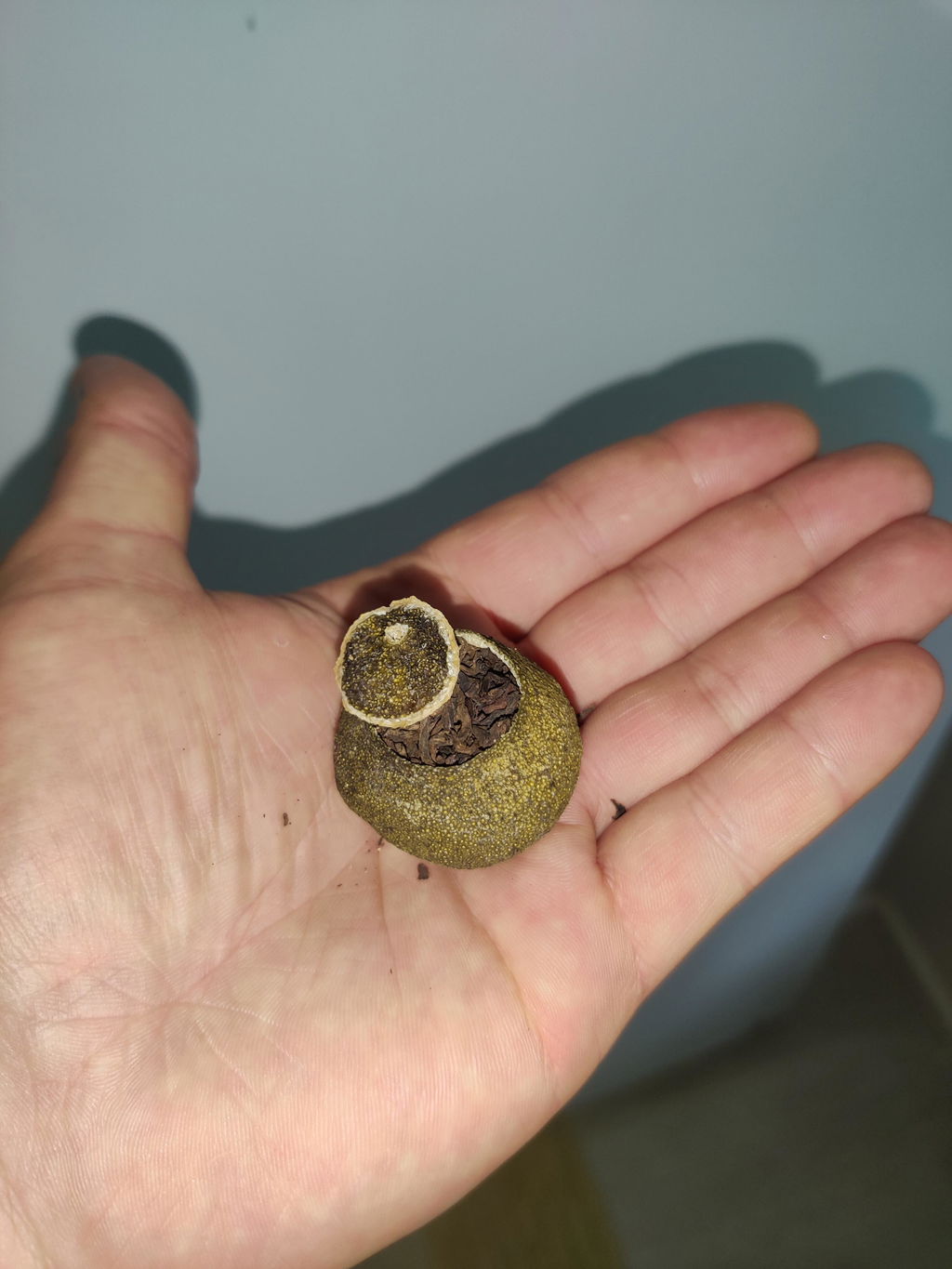
Thank you for your review! With this tea, we sourced a ripe pu erh tea that is somewhat more lightly post-fermented to achieve a certain balance between the earthiness of ripe pu erh and the fragrance of the fruit. So you can consider this a milder, more delicate Xiao Qing. You may tweak the steeping parameters to get a stronger brew, but we think the 'Fortune xiao qing gan', might suit you better.
The exterior, freshly unwrapped, is already quite captivating. This small, whole, dark green tangerine appears with an even smaller peel cap on top and a strong, fragrant citrus aroma, albeit with an underlying hint of the earthy notes typical of ripe Puerh. Using the Gongfu method at a temperature of 98°C, starting at about 90 seconds and then decreasing, the first infusion releases a citrus aroma, while camphorous notes develop from the tea leaves.
The color ranges from deep amber to red, and the perfect blend of citrus and tea is evident once again in the taste: the mandarin aroma is balanced by the tea's earthy, tobacco, and chocolate notes, which emerge in the middle stage, giving way to the typical sweetness of the dried fruit, which then returns to the citrus in the lingering aftertaste. Proceeding with successive infusions, the smoothness and sweetness of the Puerh grow in intensity and pleasure. It's a complete sensory experience that engages not only the taste and smell, but also the sight.
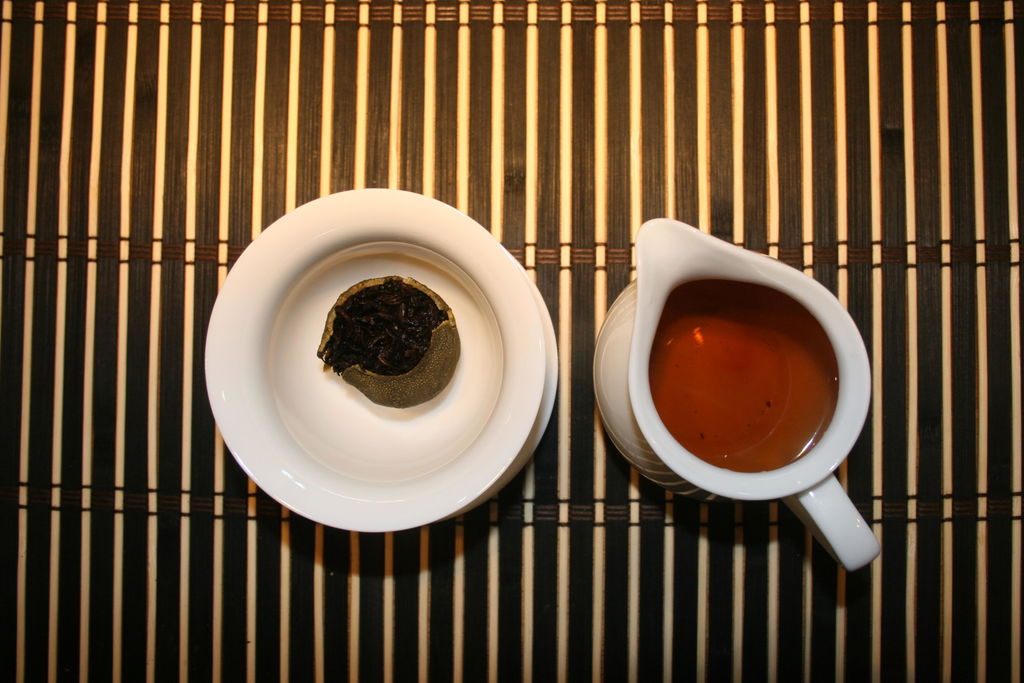
Realy good Xiao Qing Gan. Love the flavour of the pu Erh tea with the citrus flavour.
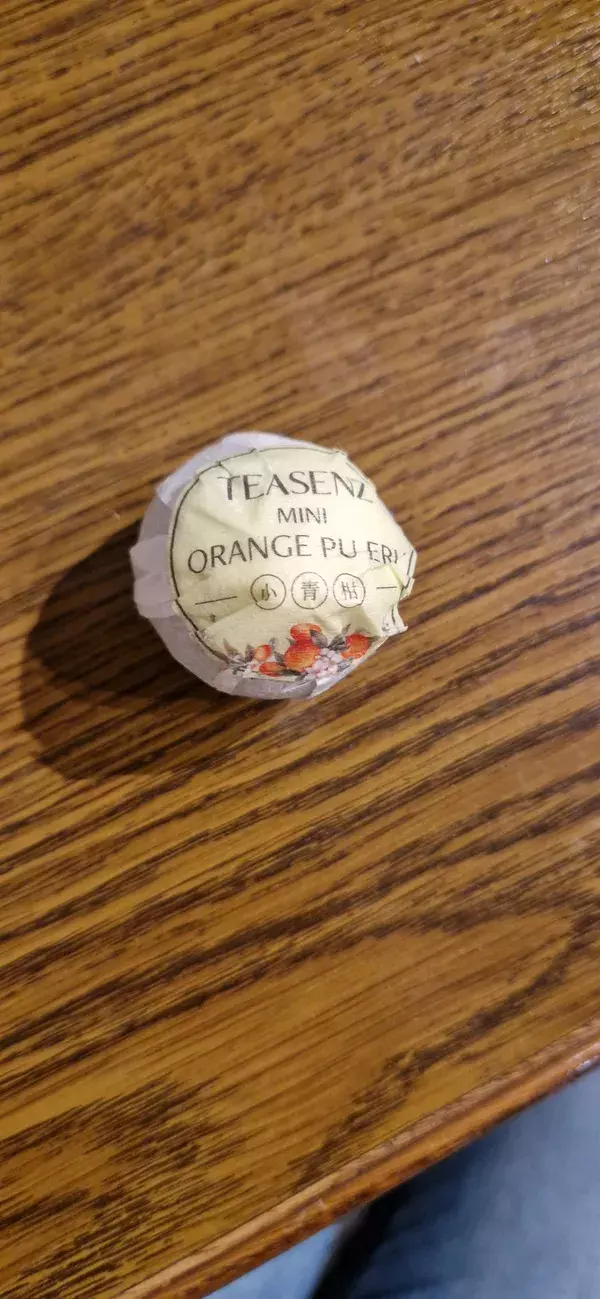
Nice twist on pu erh! The tangerine gives it a fresh touch. I expected it to be a bit more citrusy, but this is also my first time trying this type of pu erh.
Very good—it has a strong flavor and a good infusion time.
This is a great shu pu erh. The tangerine gives it a refreshing citrusy touch. It is also very easy to brew!
I really enjoyed this tea!!
Erg leuk. Kleine mandarijntjes. De hele dag thee met één mandarijntje. Blijft lekker ook! Zeer kort trekken is het lekkerst, anders wordt de ther wel erg aards. Maar niet bitter! Het was even puzzelen hoe het mandarijntje tussen twee koppen te bewaren. Uiteindelijk uitgekomen op thee zetten met afgemeten water in een theepot. Daarna gewoon mandarijntje in de theepot laten zitten. Zonder water... Goed voor zeker 4 grote koppen. Misschien wel meer.
Tip Quality Pu Ehr
Sehr Lecker 😋
Great composition combining rich taste of puer and the xiao pi tase - deep, fruity, for me - christmassy.
Lovely gentile fruti Pu-Ehr. round, with a little orange. lasts me through the day!
Hi Bas, we're glad you liked it! One of the things we like about xiao qing gan is that it doesn't release all its fragrance at once. As it's well aged and the orange aroma is fully absorbed, both the pu erh tea and the orange peel aroma has great endurance.
Delicious tea with a little orange taste
The fruit of the orange and the earthy flavour of the tea is well balanced and makes a nice sensation in the mouth. Even my father, who is not much into tea really enjoys it.
Really like these chenpi teas - high quality stuff
Excellent tea! Love it! The aroma of tangerine is amazing and the taste is really good! Totally recommended! You can brew it many times!

Nasze prace projektowe inspirowane są dziełem sztuki „Wzdłuż rzeki podczas festiwalu Qingming” autorstwa Zhanga Zeduana z dynastii Song. Zamiast pokazywać codzienne życie ludzi w stolicy Chin (jako oryginalne dzieło sztuki), pokazujemy proces parzenia herbaty przez rolników z tej samej perspektywy z lotu ptaka.
Przyglądając się szczegółowo projektowi naszych opakowań, miłośnicy herbaty będą obserwować proces parzenia herbaty, podczas którego rolnicy zbierają, suszą, zwijają i smażą liście herbaty . Następnie herbata jest degustowana w pawilonie i transportowana konno „starożytnym szlakiem herbacianym”.
Tradycyjny chiński krajobraz i motyw parzenia herbaty razem symbolizują dziedzictwo, tradycję i szacunek dla ciężkiej pracy plantatorów herbaty.