


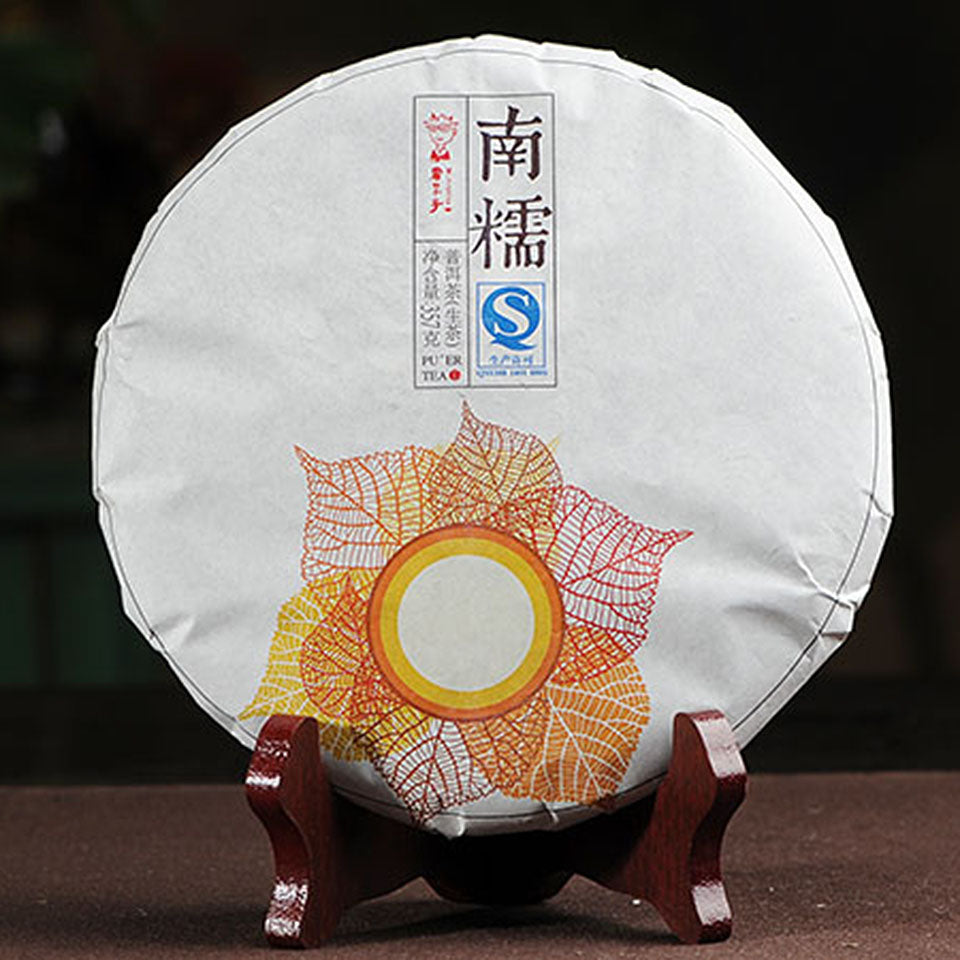
2014 Dr Puer Nannuo Gu Hua Xiang Raw Pu Erh Tea
2014 Dr Puer Nannuo Gu Hua Xiang Raw Pu Erh Tea
Een 2014 herfst rauwe (sheng) Jingmai Gu Hua Xiang (Flower Valley) pu erh thee cake. Smaak karakter: geurige bloemen, rotssuiker, en orchidee.
Herkomst
Herkomst
- Jaar: 2014
- Seizoen: Herfst
- Herkomst: Nannuo Berg
- Bladkwaliteit: wilde boom (qiao mu)
- Variëteit (ras): grootbladige Assamica (Da Ye Zhong)
- Productiedatum: 41908
- Partij: 1
- Druk: middelmatig
- Soort: rauw (sheng)
- Merk: Dr Puer
- Reeks/recept: Nannuo Gu Hua Xiang (Dalbloem)
- Vorm: pu erh theekoek
- Gewicht: 357g
Hoe te trekken
Hoe te trekken
How to make Dr Puer Nannuo Gu Hua Xiang (Valley Flower) tea?
There are two methods to prepare this pu erh tea cake:
Gongfu brewing
Brew 8 gram with 120 ml of water at 100 °C. Steep for 15 seconds and add 5 seconds for each infusion.
Western brewing
Steep 4 gram with 350 ml of water at 100 °C. Apply a brewing time of 2-3 minutes and add 1 minutes for each subsequent infusion.



Ons ontwerp is geïnspireerd op het kunstwerk “Langs de rivier tijdens het Qingming-festival” van Zhang Zeduan uit de Song-dynastie. In plaats van het dagelijks leven van mensen in de hoofdstad van China te tonen (zoals het originele kunstwerk), tonen wij het theemakingsproces van boeren vanuit hetzelfde vogelperspectief.
Bij het nauwkeurig bekijken van ons verpakkingsontwerp zullen theeliefhebbers het theemakingsproces waarnemen, met theeboeren die theebladeren plukken, drogen, rollen en bakken. De thee wordt vervolgens geproefd in een paviljoen en vervoerd door paarden langs de ‘oude theeroute’.
Samen symboliseren het traditionele Chinese landschap en het thema van het theemaken erfgoed, traditie en respect voor het harde werk van theeboeren.