


2014 Dr. Puer Nannuo Gu Hua Xiang Roher Pu Erh Tee
2014 Dr. Puer Nannuo Gu Hua Xiang Roher Pu Erh Tee
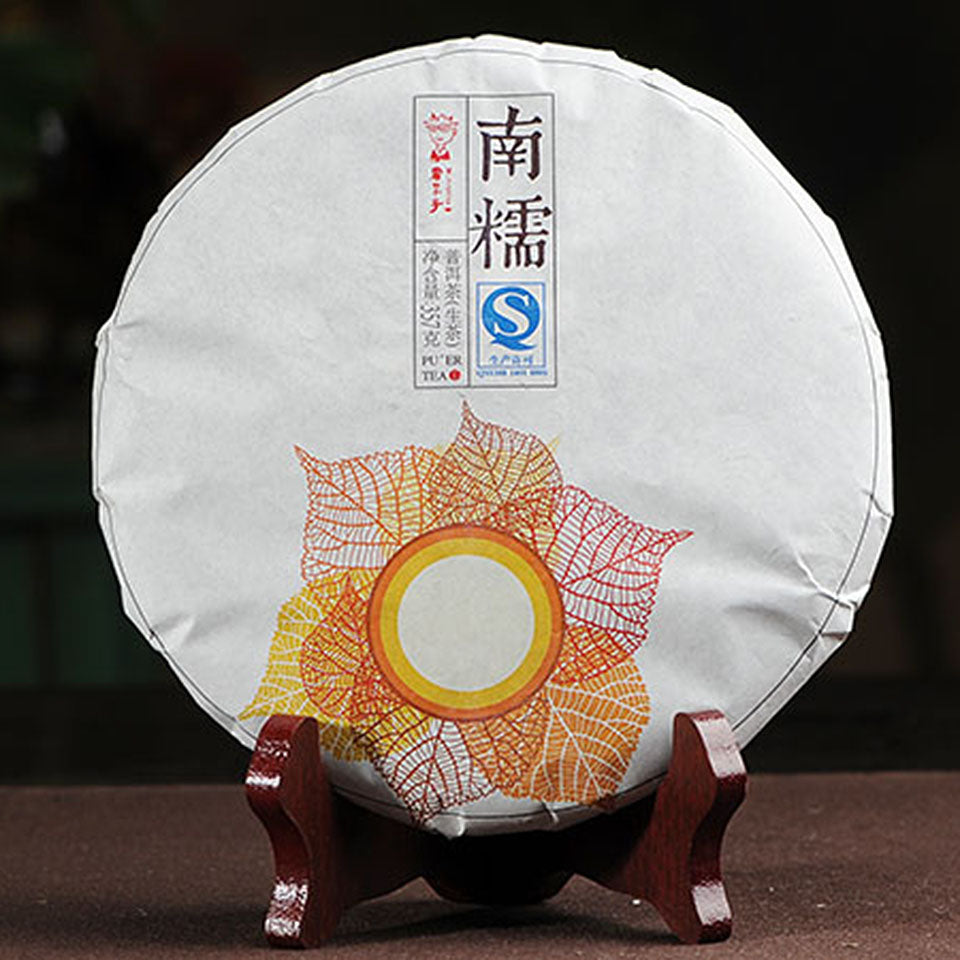
Herbstlicher roher Pu-erh-Teekuchen vom wilden Laubenbaum (qiao mu) im Nannuo-Berg. Geschmack: reife Früchte;Honig;Orangenschale;Zuckerrohr.
Herkunft
Herkunft
- Jahr: 2014
- Jahreszeit: Herbst
- Herkunft: Nannuo-Berg
- Blattqualität: wilder Baum (qiao mu)
- Varietät (Kultivar): großes Blatt Assamica (Da Ye Zhong)
- Herstellungsdatum: 41908
- Charge: 1
- Pressung: mittel
- Art: roh (sheng)
- Marke: Dr Puer
- Serie/Rezeptur: Nannuo Gu Hua Xiang (Talblüte)
- Form: Pu-Erh-Tee-Kuchen
- Gewicht: 357g
Wie man zieht
Wie man zieht
How to make Dr Puer Nannuo Gu Hua Xiang (Valley Flower) tea?
There are two methods to prepare this pu erh tea cake:
Gongfu brewing
Brew 8 gram with 120 ml of water at 100 °C. Steep for 15 seconds and add 5 seconds for each infusion.
Western brewing
Steep 4 gram with 350 ml of water at 100 °C. Apply a brewing time of 2-3 minutes and add 1 minutes for each subsequent infusion.



Unsere Designarbeit ist inspiriert von dem Kunstwerk „Entlang des Flusses während des Qingming-Festes“ von Zhang Zeduan aus der Song-Dynastie. Anstatt das tägliche Leben der Menschen in der Hauptstadt Chinas (wie im Originalkunstwerk) darzustellen, zeigen wir den Teeherstellungsprozess der Bauern aus derselben Vogelperspektive.
Bei genauer Betrachtung unseres Verpackungsdesigns werden Teeliebhaber den Teeherstellungsprozess beobachten, bei dem Teebauern Teeblätter pflücken, trocknen, rollen und braten. Der Tee wird dann in einem Pavillon verkostet und auf dem "alten Teeweg" mit Pferden transportiert.
Zusammen symbolisieren die traditionelle chinesische Landschaft und das Thema der Teezubereitung Erbe, Tradition und Respekt für die harte Arbeit der Teebauern.