


2014 Dr Puer Nannuo Gu Hua Xiang Rå Pu Erh Te
2014 Dr Puer Nannuo Gu Hua Xiang Rå Pu Erh Te
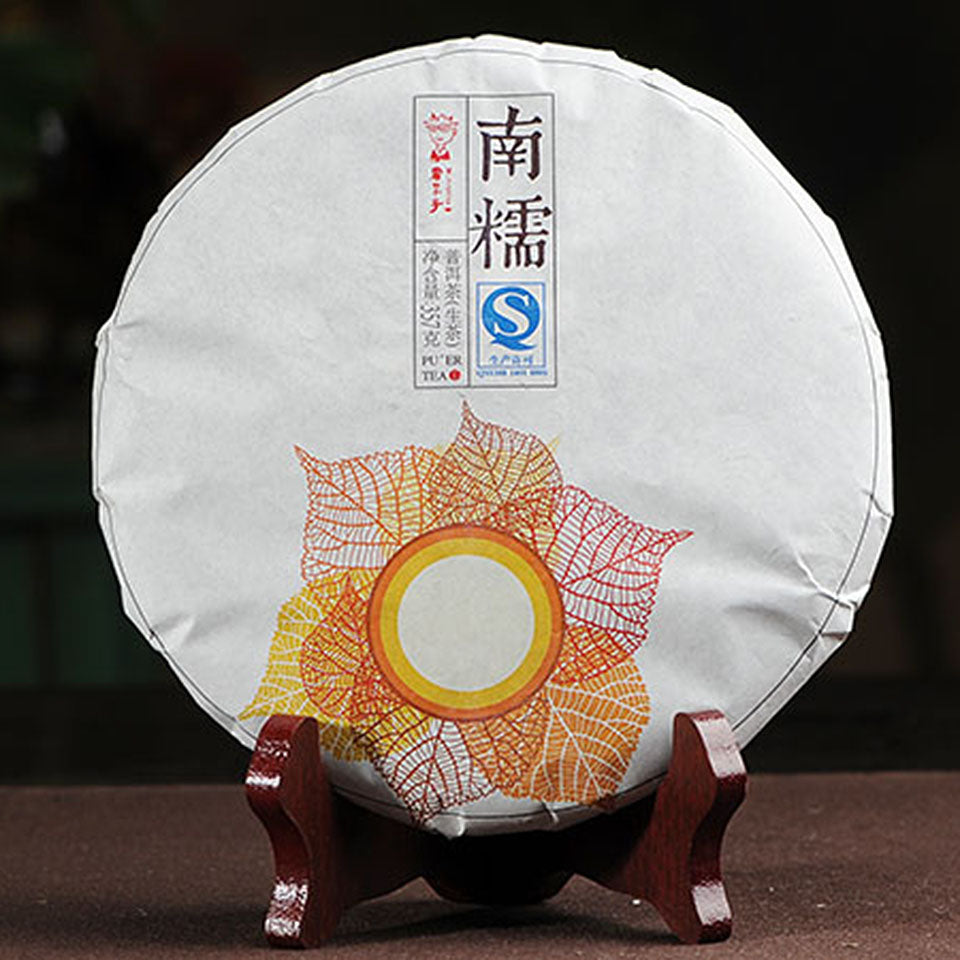
Höstens rå pu erh kaka från vilda bersåträd (qiao mu) i Nannuo Mountain. Smak: mogen frukt; honung; apelsinskal; sockerrör.
Ursprung
Ursprung
- År: 2014
- Säsong: Höst
- Ursprung: Nannuo berg
- Bladgrad: vild trädart (qiao mu)
- Sort (odlingssort): storbladig Assamica (Da Ye Zhong)
- Produktionsdatum: 41908
- Parti: 1
- Pressning: medel
- Typ: rå (sheng)
- Märke: Dr Puer
- Serie/recept: Nannuo Gu Hua Xiang (Dalgblomma)
- Form: pu erh te-kaka
- Vikt: 357g
Hur man drar
Hur man drar
How to make Dr Puer Nannuo Gu Hua Xiang (Valley Flower) tea?
There are two methods to prepare this pu erh tea cake:
Gongfu brewing
Brew 8 gram with 120 ml of water at 100 °C. Steep for 15 seconds and add 5 seconds for each infusion.
Western brewing
Steep 4 gram with 350 ml of water at 100 °C. Apply a brewing time of 2-3 minutes and add 1 minutes for each subsequent infusion.



Vårt designarbete är inspirerat av konstverket "Along the River During the Qingming Festival" av Zhang Zeduan från Songdynastin. Istället för att visa människors vardagsliv i Kinas huvudstad (som i originalverket), visar vi tedrickningsprocessen hos bönder ur samma fågelperspektiv.
När man granskar vår förpackningsdesign i detalj kommer teentusiaster att observera tedrickningsprocessen, där tedjurar plockar, torkar, rullar och steker teblad. Teet smakas sedan i en paviljong och transporteras med hästar längs den 'gamla teresan'.
Tillsammans symboliserar det traditionella kinesiska landskapet och temat för tedrickande arv, tradition och respekt för tedjurets hårda arbete.